
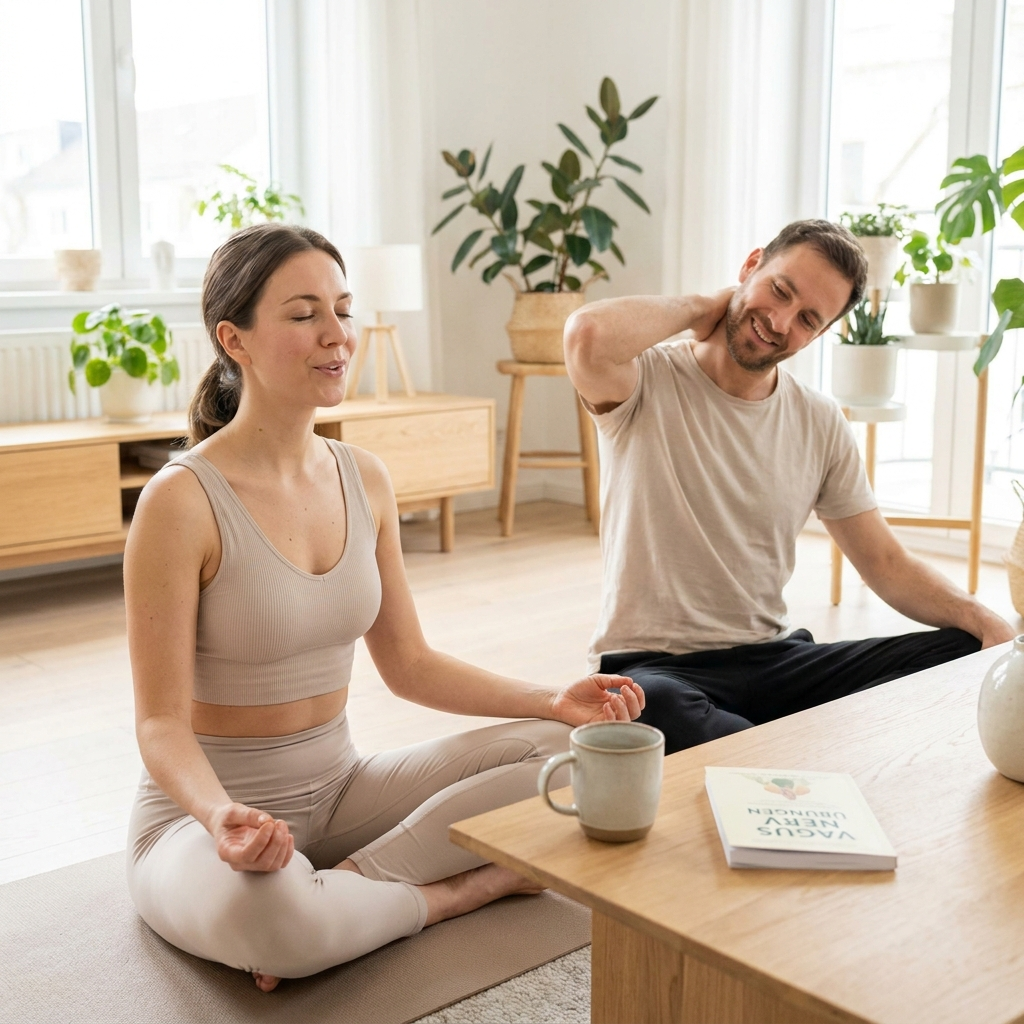
The vagus nerve is one of the most important nerves in your body and plays a central role in your well-being. As the longest cranial nerve, it connects your brain to nearly all vital organs and controls numerous essential functions. If you suffer from stress, anxiety, or digestive problems, targeted stimulation of the vagus nerve can have a supportive effect. In this article, you’ll learn what exactly the vagus nerve is and how you can activate it with 12 simple exercises at home.
What is the vagus nerve and why is it so important?
The vagus nerve, also known as the tenth cranial nerve or nervus vagus, is the longest and most important nerve of the parasympathetic nervous system. It runs from the brainstem through the neck and chest down into the abdominal cavity. In doing so, it connects your brain to your heart, lungs, stomach, intestines, and many other organs.
The vagus nerve is primarily responsible for activating the parasympathetic nervous system – that part of the autonomic nervous system responsible for relaxation, regeneration, and digestion. It essentially forms a counterbalance to the sympathetic nervous system, which is responsible for stress and fight-or-flight responses. A well-functioning vagus nerve helps you calm down more quickly after stressful situations and allows your body to recover.
What functions does the vagus nerve regulate?
The tasks of the vagus nerve are diverse and influence numerous bodily functions:
It is involved in regulating your heart rate and contributes to lowering it when you are relaxed. It also influences your breathing and can promote deep, calm breathing. In the digestive system, it activates the production of digestive enzymes and promotes intestinal movements (peristalsis). Additionally, it plays a role in regulating inflammatory processes in your body. It also influences your mood, as it is involved in communication between the gut and brain and can thus indirectly affect the availability of neurotransmitters like serotonin.
Signs of low vagal tone
Vagal tone describes how active your vagus nerve is. Low vagal tone can be associated with various complaints. These include persistent stress and anxiety, digestive problems such as constipation or irritable bowel syndrome, an elevated heart rate even during rest periods, sleep disturbances and difficulty falling asleep, chronic inflammatory processes in the body, depressive moods, and difficulty concentrating.
If you notice several of these symptoms in yourself, targeted stimulation of the vagus nerve can be supportive. However, if symptoms persist or are severe, you should seek medical advice to clarify the causes.
The 12 best exercises for vagus nerve stimulation
1. Deep belly breathing
Breathing is one of the most direct ways to influence your vagus nerve. For deep belly breathing, place one hand on your abdomen and breathe slowly in through your nose so that your belly rises. Hold your breath briefly and then breathe out slowly through your mouth as your belly lowers again. Repeat this for 5 to 10 minutes daily. This exercise can activate your parasympathetic nervous system and send relaxation signals to your brain.
2. The 4-7-8 breathing technique
This special breathing exercise was developed by Dr. Andrew Weil and is recommended for relaxation. Breathe in through your nose while counting to 4. Hold your breath and count to 7. Breathe out through your mouth while counting to 8. Perform this cycle four times in a row. This technique can be particularly helpful before bedtime or in stressful situations.
3. Cold therapy for the face
Cold on your face can stimulate the vagus nerve through the so-called dive reflex. Fill a bowl with cold water and ice cubes. Immerse your face for 15 to 30 seconds or place a cold, damp washcloth on your face. Focus particularly on your forehead and eye area. This method can slow your heartbeat and activate relaxation mode. If you have cardiovascular disease, you should only do this exercise after consulting with your doctor.
4. Humming and singing
The vibrations created by humming or singing can stimulate the vagus nerve, which runs in the area of the larynx. Hum your favorite melody for several minutes or sing your favorite songs loudly. Chanting “Om” during yoga can also have this effect. The more regularly you do this exercise, the more it can support your well-being.
5. Gargling
Gargling can activate the vagus nerve through vibration in the throat. Take a sip of lukewarm water and gargle with it for 30 to 60 seconds. Repeat this several times daily, ideally morning and evening. This simple exercise can be easily integrated into your daily routine.
6. Laughing
Laughter is not only good for the soul, but can also stimulate your vagus nerve. Deep laughter activates the diaphragm and releases endorphins. Watch funny videos, meet with friends who make you laugh, or try a laughter yoga class. Regular laughter can help lower your stress level.
7. Yoga and gentle stretches
Certain yoga positions can indirectly support the vagus nerve through their relaxing effect. Child’s pose (Balasana) is particularly relaxing: Kneel down, sit on your heels, and fold your upper body forward. Stretch your arms forward and stay in this position for 3 to 5 minutes. Cat-cow pose can also be beneficial: Get on all fours and alternate between a rounded back (cat) and an arched back (cow).
8. Gentle neck massage
The vagus nerve runs along the sides of the neck. A gentle massage of this region can have a relaxing effect. Massage the sides of your neck from top to bottom with light pressure. Perform circular movements and also massage the area behind your ears. Take 5 to 10 minutes daily for this, preferably with some massage oil. Make sure the pressure remains comfortable – too much pressure on the carotid artery should be avoided.
9. Meditation and mindfulness
Regular meditation can strengthen vagal tone, as various studies suggest. Sit comfortably and focus on your breath. Observe your thoughts without judging them and keep returning to your breath. Start with 5 minutes daily and gradually increase the duration. Apps like Headspace, Calm, or 7Mind can help you build a regular practice.
10. Cultivating social connections
Positive social interactions can also activate your vagus nerve. Consciously spend time with people who are good for you. Have deep conversations instead of superficial small talk. Physical closeness such as hugs can be particularly effective – a longer hug (about 20 seconds) can promote the release of oxytocin, which has a calming effect. Smiling and eye contact can also have positive effects.
11. Probiotics and gut-friendly nutrition
The gut-brain axis is partially mediated via the vagus nerve. A healthy gut flora can support its function. Integrate fermented foods such as sauerkraut, kimchi, kefir, and natural yogurt into your diet. High-fiber foods such as whole grain products, legumes, and vegetables also promote healthy gut flora. Omega-3 fatty acids from fatty fish, flaxseeds, or walnuts can additionally support nerve function. For specific intestinal problems, you should seek medical advice.
12. Contrast showers
Alternating between warm and cold when showering can stimulate the vagus nerve. First shower warm for 2 to 3 minutes, then turn the water to cold for 30 to 60 seconds. Repeat this alternation 3 to 5 times and end the shower with cold water. Start slowly and gradually increase the cold duration. This method can not only support your vagal tone but also strengthen the immune system. If you have cardiovascular disease, high blood pressure, or other pre-existing conditions, you should consult your doctor first.
How often should you do these exercises?
For positive effects, regularity is important. You don’t have to do all 12 exercises daily, but try to integrate at least 3 to 5 of them into your daily routine. Some exercises like breathing techniques can be applied several times a day, especially in stressful situations. Others like meditation or yoga are ideally done once a day for 10 to 20 minutes.
Start with small steps and increase gradually. After several weeks of regular practice, positive changes can become noticeable. Your stress level may decrease, your digestion may improve, and you may feel overall more balanced and relaxed.
When should you see a doctor?
While most exercises for vagus nerve stimulation are safe for healthy people, there are situations when you should seek medical advice. If you experience persistent heart rhythm disturbances, severe or chronic digestive problems that don’t improve despite exercises, severe depression or anxiety, or sudden, unexplained symptoms, medical evaluation is important. The exercises can support a healthy lifestyle but do not replace medical diagnosis or treatment for serious conditions.
Conclusion: Your vagus nerve as a key to greater well-being
The vagus nerve plays an important role in your health and well-being. With the 12 exercises presented, you have simple and practical methods at hand to support your vagal tone and activate your parasympathetic nervous system. The exercises require no expensive equipment or much time – many can be easily integrated into your daily life.
Start trying out some of these techniques today. Pay attention to how your body responds and find out which exercises work best for you. With patience and regularity, you can not only strengthen your vagus nerve but also contribute to more balance in your nervous system. The result can be more serenity, improved well-being, and a higher quality of life.
Dieser Ratgeber dient ausschließlich zu Informationszwecken und ersetzt keine medizinische Beratung oder Diagnose. Bei anhaltenden Beschwerden konsultieren Sie bitte einen Arzt. Nahrungsergänzungsmittel und Heilpflanzen sollten nicht ohne Rücksprache mit einem Therapeuten eingenommen werden.