
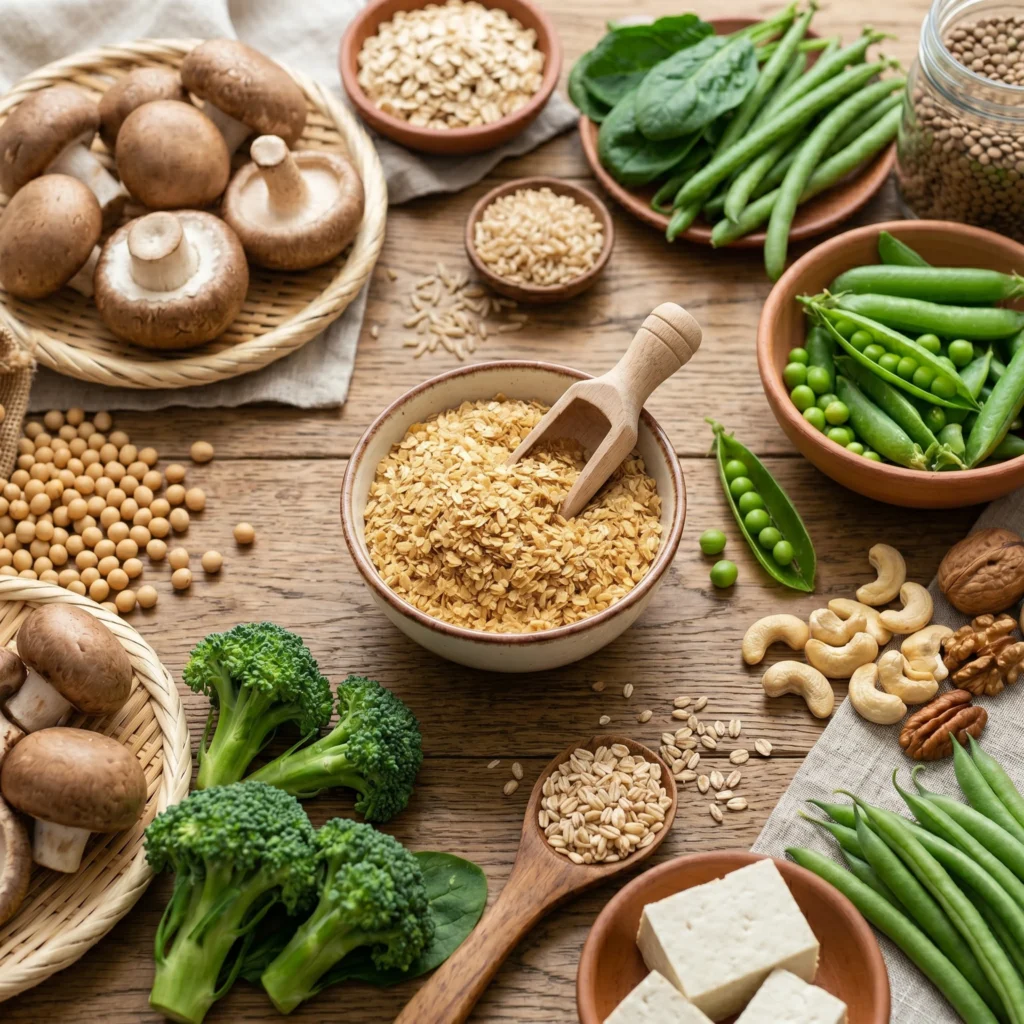
Have you ever heard of spermidine? This fascinating natural substance could contribute to supporting a healthy life. Spermidine is an endogenous molecule that plays an important role in autophagy – a cleansing process of your cells that is essential for health. The best part: You can increase your spermidine intake naturally through the right diet.
In this article, you’ll learn everything important about spermidine, how it promotes autophagy, and which plant-based foods are particularly rich in this valuable substance.
What is spermidine and why is it so important?
Spermidine is a so-called polyamine – an organic compound that occurs in all living cells. Your body produces spermidine itself, but this internal production continuously decreases with increasing age. Therefore, intake through food becomes more important the older you get.
The name may be confusing at first glance, because spermidine was actually first discovered in sperm in the 1670s. But don’t let that put you off: This substance is found in practically all body cells and is abundantly present especially in wheat germ, legumes, and many other plant-based foods.
Scientific research in recent years has shown that spermidine could play a role in various cellular processes. Studies suggest that higher spermidine intake may be associated with positive health effects.
Autophagy – your body’s cellular waste disposal
To understand why spermidine is so interesting, you first need to learn about the concept of autophagy. The term comes from Greek and literally means “self-eating”. That sounds strange at first, but describes a vital recycling process in your cells.
How does autophagy work?
Think of autophagy as a cleaning service for your cells. Over time, damaged proteins, defective cell components, and other “waste products” accumulate in every cell. These can impair normal cell function. Autophagy ensures that these defective components are broken down, recycled, and the recovered building blocks are reused for new cell structures.
During autophagy, damaged cell components are enclosed by a membrane and transported to the so-called lysosomes – the digestive organs of the cell. There they are broken down and the individual parts are returned to the metabolism. This process significantly contributes to cell health.
Why does autophagy decrease with age?
With increasing age, autophagy tends to become less efficient. This means that more cellular waste can accumulate, which is associated with various age-related processes – from changes in the nervous system to cardiovascular changes. This is exactly where spermidine comes into play.
How spermidine activates autophagy
Spermidine is one of the natural substances that can stimulate autophagy. It acts as a so-called “autophagy inducer” and can trigger effects similar to caloric restriction or fasting – both well-known methods for activating autophagy.
The exact molecular mechanisms are complex, but in simplified terms: Spermidine influences certain enzymes and signaling pathways involved in the regulation of autophagy. This stimulates the cellular cleansing process. Particularly remarkable is that spermidine does this naturally, without the radical restrictions of a strict diet.
Scientific evidence
Numerous studies have investigated the effects of spermidine. In animal experiments, it has been shown that a spermidine-rich diet can extend lifespan – in a wide variety of organisms, from yeast cells to fruit flies to mice. Particularly interesting, however, are the observational studies in humans.
A large epidemiological study from Austria with over 800 participants showed that people with higher spermidine intake through food had a lower risk of cardiovascular diseases. The differences were considerable: The group with the highest spermidine intake had a reduced mortality risk compared to the group with the lowest intake.
Potential health benefits of spermidine
The activation of autophagy by spermidine is associated with a variety of potential health benefits:
- Heart health: Spermidine appears to have positive effects on your cardiovascular system. Studies show that it can have a favorable effect on blood pressure and support vascular function. This is likely because autophagy helps remove damaged cell components in cardiac muscle cells and regulate inflammatory processes.
- Brain health and cognition: Your brain could also benefit from increased autophagy. Spermidine is being researched with regard to possible protection against neurodegenerative changes by potentially influencing the accumulation of misfolded proteins – a hallmark of diseases such as Alzheimer’s and Parkinson’s. Some studies also suggest that spermidine can support memory performance.
- Anti-inflammatory effects: Chronic inflammation is considered a factor in numerous lifestyle diseases. Spermidine has shown anti-inflammatory properties in studies and can help lower the level of chronic inflammatory markers in the body.
- Metabolic health: Spermidine can also positively influence your metabolism. It supports insulin sensitivity and could thereby contribute to metabolic health. It also promotes the function of mitochondria – the powerhouses of your cells – which can contribute to more energy.
The best plant-based sources of spermidine
The good news is: You don’t have to buy expensive dietary supplements to get spermidine. Many plant-based foods are naturally rich in this substance.
| Food | Approximate spermidine content |
| Wheat germ | approx. 240 mg / kg |
| Soybeans / Tofu / Tempeh | approx. 150–200 mg / kg |
| Mushrooms / Shiitake | approx. 90 mg / kg |
| Chickpeas | approx. 80 mg / kg |
| Lentils / Peas | approx. 50–70 mg / kg |
| Nuts (hazelnuts, walnuts, cashews) | approx. 40–60 mg / kg |
| Whole grain products | approx. 25–50 mg / kg |
Practical tips for the kitchen:
- Wheat germ – the top performers: Just one to two tablespoons of wheat germ daily can make a significant contribution to your spermidine supply. You can simply sprinkle them over your muesli, mix them into smoothies, or stir them into yogurt.
- Green vegetables and fermented foods: Broccoli, cauliflower, and green beans also provide spermidine. Interestingly, fermented foods such as sauerkraut, kimchi, and natto also contain relevant amounts.
How much spermidine do you need?
The optimal daily amount of spermidine has not yet been scientifically determined. Most studies that showed positive effects assume an intake of about 5–10 mg of spermidine per day. Some researchers discuss amounts up to 15 mg daily.
The average Western diet provides about 7–15 mg of spermidine per day. With a targeted selection of spermidine-rich foods, you can easily optimize your intake.
Example for everyday life (approx. 10–12 mg spermidine):
- 2 tablespoons wheat germ (approx. 3–5 mg)
- 150 g tofu or tempeh (approx. 2–3 mg)
- 100 g mushrooms (approx. 1 mg)
- A handful of nuts (approx. 1–2 mg)
- Two slices of whole grain bread (approx. 1 mg)
Additional strategies to promote autophagy
While a spermidine-rich diet is an excellent foundation, there are other lifestyle habits that support autophagy:
- Intermittent fasting: Regular fasting periods are one of the best-known autophagy triggers. Even a 14 to 16-hour overnight fast can boost autophagy. Spermidine and intermittent fasting complement each other ideally.
- Exercise: Regular physical activity, especially endurance training and high-intensity interval training (HIIT), also stimulate autophagy.
- Sleep: Sufficient and high-quality sleep is important for cellular regeneration. Therefore, aim for 7–9 hours of restful sleep per night.
Are there side effects or risks?
The intake of spermidine through natural foods is considered absolutely safe. Since spermidine occurs in many everyday foods, we have been consuming it for ages. There are no known side effects with normal intake through diet.
However, you should be cautious with high-dose dietary supplements and consult your doctor if in doubt – especially if you have pre-existing conditions or are taking medications. Natural intake through food is generally the safer and more balanced way.
Conclusion: Spermidine as a building block for healthy aging
Spermidine is a fascinating natural substance with great potential for your health. By activating autophagy, it supports your cells in important cleansing processes. The scientific findings on the effects on heart health, brain function, and aging processes are promising.
The best part: You don’t need exotic superfoods or expensive supplements. With a varied, plant-based diet full of wheat germ, legumes, mushrooms, and nuts, you can naturally optimize your spermidine intake. Combined with exercise, good sleep, and occasional fasting, you create the best conditions for healthy aging at the cellular level. Your cells will thank you!
Dieser Ratgeber dient ausschließlich zu Informationszwecken und ersetzt keine medizinische Beratung oder Diagnose. Bei anhaltenden Beschwerden konsultieren Sie bitte einen Arzt. Nahrungsergänzungsmittel und Heilpflanzen sollten nicht ohne Rücksprache mit einem Therapeuten eingenommen werden.