
Mast cell activation syndrome, or MCAS for short, is a complex condition that severely limits the lives of many affected individuals. If you suffer from unexplained allergic reactions, skin problems, digestive complaints, or neurological symptoms, MCAS could be a possible cause. With a holistic therapeutic approach, you can often significantly alleviate your symptoms and improve your quality of life. In this article, you will learn exactly what MCAS is, how it manifests, and what holistic treatment options are available to you.
What is Mast Cell Activation Syndrome?
Mast cell activation syndrome is a condition in which your mast cells are overactive and release increased amounts of pro-inflammatory signaling substances. Mast cells are important components of your immune system and are found throughout your body – particularly numerous in the skin, the digestive tract, and the airways. Normally, they protect you from pathogens and parasites. In MCAS, however, these cells react excessively to stimuli that are actually harmless.
The released signaling substances such as histamine, tryptase, heparin, and various cytokines can then trigger a wide variety of symptoms. The insidious part: MCAS often goes unrecognized for years because the symptoms are so varied and can mimic other conditions. Many affected individuals have endured a long road of suffering before the correct diagnosis is made.
Typical Symptoms of MCAS
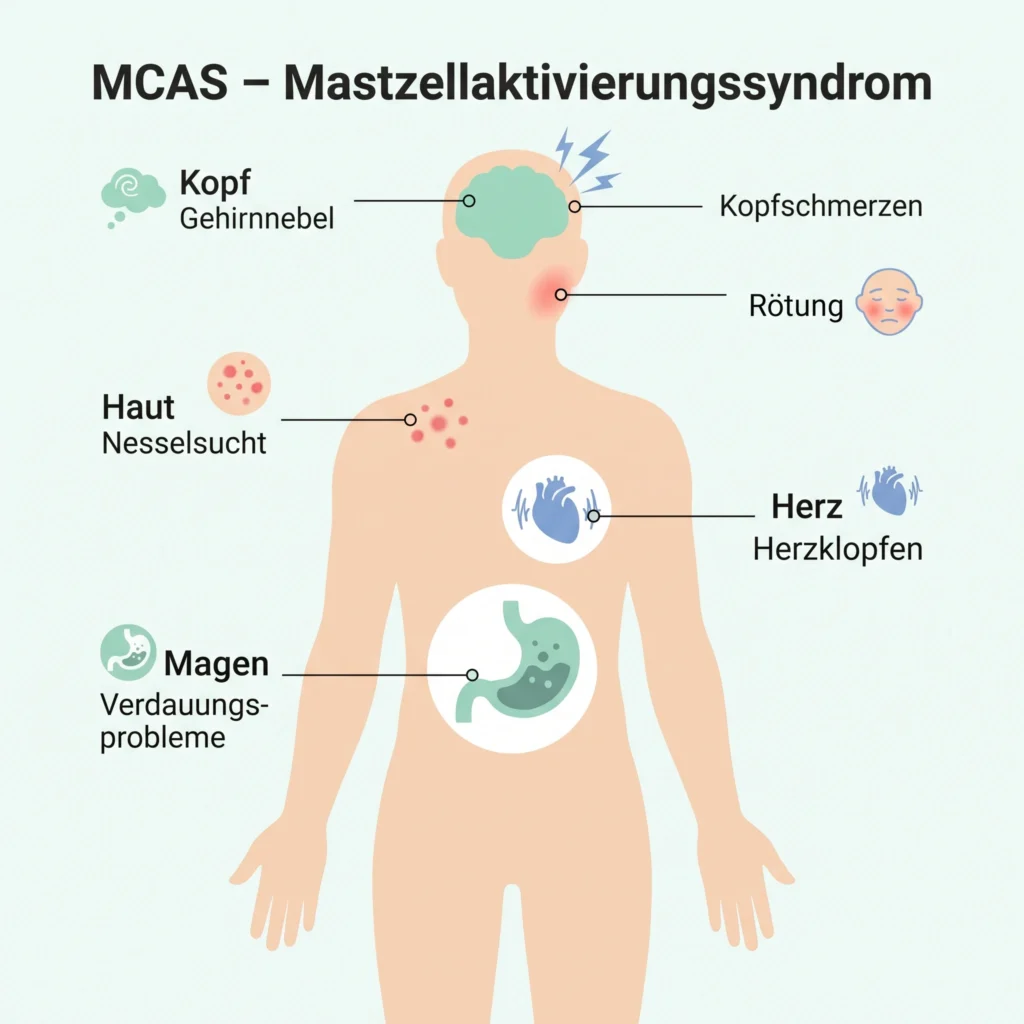
The symptoms of MCAS are extremely varied and can affect virtually every organ system. This is what makes the diagnosis so challenging. The most common complaints include:
Skin Reactions
Your skin is particularly sensitive with MCAS. Itching, skin redness, hives (urticaria), sudden flushing of the face and upper body, and swelling can occur. Many affected individuals report extremely sensitive skin that reacts to a wide variety of triggers.
Gastrointestinal Complaints
The digestive tract is often affected. You may suffer from abdominal pain, nausea, diarrhea, constipation, or alternating between the two. Bloating, heartburn, and the feeling of food intolerance toward an increasing number of foods are also common.
Neurological and Psychological Symptoms
MCAS can also affect your nervous system. Brain fog, difficulty concentrating, headaches, dizziness, sleep disorders, and mood swings are not uncommon. Many affected individuals report anxiety or depressive episodes.
Cardiovascular Symptoms
Your cardiovascular system may respond with heart palpitations, blood pressure fluctuations, dizziness upon standing, or a feeling of tightness in the chest. These symptoms can be frightening, but they are not unusual with MCAS.
The Diagnosis of MCAS
Diagnosing mast cell activation syndrome is not straightforward and requires an experienced physician. There is no single test that definitively proves MCAS. Instead, the diagnosis is based on several factors:
First, your doctor will take a detailed medical history and carefully document your symptoms. Possible triggers that provoke your complaints are also important to note. Laboratory tests can reveal elevated levels of tryptase, histamine, or its breakdown products (such as methylhistamine) in the blood or urine – ideally when the blood sample is taken during or shortly after an acute episode.
Another diagnostic criterion is the response to mast cell stabilizers and antihistamines. If your symptoms improve significantly with this therapy, it may be indicative of MCAS. It is also important to rule out other conditions such as systemic mastocytosis, allergic reactions, or other immune disorders.
Holistic Treatment Approaches for MCAS
The holistic treatment of MCAS considers not only drug therapy but also incorporates your entire lifestyle, diet, stress management, and environmental factors. This approach can be helpful since MCAS is a multifactorial condition.
Diet as an Important Building Block of Therapy
Your diet can play an important role in MCAS. Many foods contain histamine or can trigger the release of histamine in the body. A low-histamine diet is therefore an important step for many affected individuals. You should be particularly cautious with:
Aged cheeses, smoked and processed meat products, canned fish, fermented foods such as sauerkraut, long-stored meat, alcohol (especially red wine), chocolate, tomatoes, spinach, avocado, and citrus fruits. You may also need to avoid histamine liberators such as strawberries, certain nuts, seafood, and various food additives.
Instead, focus on fresh, unprocessed foods. Fresh meat and fish (prepared as soon as possible after purchase), most fresh vegetables (except those mentioned above), rice, quinoa, potatoes, fresh dairy products, and certain fruits such as apples, pears, and blueberries are often well tolerated.
Important: Every person with MCAS reacts individually. Keep a detailed food diary to identify your personal triggers. A temporary elimination diet under therapeutic supervision can be very informative.
Nutrient Therapy and Supplementation
Certain nutrients may potentially help stabilize your mast cells and reduce inflammation. The following are frequently discussed:
Vitamin C can support histamine breakdown and is often taken in divided doses throughout the day. Quercetin, a plant compound, can stabilize mast cells. Vitamin D regulates your immune system and should be supplemented when a deficiency has been confirmed. Omega-3 fatty acids have anti-inflammatory properties – make sure to choose high-quality, fresh preparations. DAO (diamine oxidase) is the enzyme that breaks down histamine – supplementation may be considered in cases of deficiency.
Magnesium, B vitamins, and probiotic bacterial strains that do not produce histamine can also provide additional support. Consult an experienced therapist who can tailor the dosage to your individual needs and take possible interactions into account.
Stress Management and Psychological Balance
Stress is frequently reported as a trigger for MCAS flare-ups. Your mast cells can respond to stress hormones. Effective stress management can therefore be beneficial. Establish regular relaxation techniques in your daily routine:
Breathing exercises and meditation can calm your nervous system. Even 10 minutes a day can make a difference. Yoga and gentle movement can help without overloading the body. Progressive muscle relaxation according to Jacobson can reduce physical tension. Adequate sleep is essential – develop a consistent sleep routine.
Psychotherapeutic support can also be valuable, especially if you suffer from anxiety or depressive symptoms due to the chronic nature of the condition. Many affected individuals benefit from cognitive behavioral therapy or mindfulness-based approaches.
Optimizing Environmental Factors
Your surroundings can influence your mast cells. Pay attention to the following points: Avoid synthetic fragrances in cosmetics, detergents, and room sprays if you react to them. Reduce exposure to mold by ventilating regularly and addressing moisture problems. Wear naturally sourced, breathable clothing whenever possible. Ensure good air quality in your living spaces.
Extreme temperatures, intense sun exposure, or sudden changes in weather can also be triggers for some individuals. Learn to protect your body from these influences.
Medication Support
Even with a holistic approach, medications can be necessary and beneficial. Conventional medical therapy typically includes: H1 antihistamines block histamine receptors and can relieve acute symptoms. H2 antihistamines work particularly in the gastrointestinal tract. Mast cell stabilizers such as cromoglicic acid can prevent the release of signaling substances from mast cells. In severe cases, leukotriene antagonists or, in certain situations, low-dose aspirin may also be used.
Drug therapy should always be individually tailored and coordinated with your treating physician. It often forms the foundation upon which the other holistic measures can build.
Gut Restoration and the Microbiome
Your gut and its microbiome can play a role in MCAS. A disrupted gut microbiome has been associated with increased mast cell activation. Gut restoration may therefore be helpful for some individuals. The goal is to strengthen the intestinal barrier, reduce inflammatory processes, and support a healthy microbiome.
Probiotics with low-histamine bacterial strains such as Lactobacillus rhamnosus or Bifidobacterium infantis are frequently recommended. Prebiotics can support beneficial gut bacteria – however, you should proceed with caution here, as some people with MCAS are sensitive to certain dietary fibers. L-glutamine can support the regeneration of the intestinal mucosa. Healing clay or zeolite are also sometimes used.
A stool analysis can provide information about the state of your microbiome and help guide therapy in a targeted manner.
Exercise and Physical Activity
Exercise is important for your health but can also be a trigger in MCAS. Find the right balance for you. Intense exertion can activate mast cells in some individuals, while moderate exercise often has an anti-inflammatory effect. Gentle activities such as walking, light cycling, swimming in comfortably tempered water, or gentle yoga are ideal. Make sure you do not overexert yourself and listen to the signals your body sends.
Long-Term Perspectives and Quality of Life
MCAS is a chronic condition, but that does not mean you have to remain severely restricted indefinitely. Many affected individuals achieve an improvement in their symptoms and quality of life through the consistent implementation of holistic therapeutic approaches. The key lies in patience and the willingness to try different approaches and adapt them individually.
Connecting with others who are affected is also important. Self-help groups, whether online or in person, can provide valuable support and help you avoid feeling alone with this condition. The path to improvement is often not straightforward but requires adjustments and sometimes setbacks as well. Stay the course and do not lose courage.
Conclusion: An Individual Path to Improvement
Mast cell activation syndrome is a complex condition that requires a holistic and individualized treatment approach. The combination of a low-histamine diet, targeted nutrient therapy, stress management, optimization of environmental factors, and medication support when needed can form the foundation of successful therapy. It is important that you learn to listen to your body and identify your personal triggers.
The holistic approach also means that you actively work on your health and take responsibility. This can feel overwhelming at first, but it gives you greater long-term control over your symptoms. Work closely with experienced therapists who are familiar with MCAS, and be patient with yourself. Improvements often do not happen overnight but develop gradually.
With the right strategy and consistent implementation, you can often significantly improve your quality of life and bring more normality back into your daily routine. MCAS may be a challenge, but for many affected individuals it is manageable – and you are not alone in this.
Dieser Ratgeber dient ausschließlich zu Informationszwecken und ersetzt keine medizinische Beratung oder Diagnose. Bei anhaltenden Beschwerden konsultieren Sie bitte einen Arzt. Nahrungsergänzungsmittel und Heilpflanzen sollten nicht ohne Rücksprache mit einem Therapeuten eingenommen werden.