
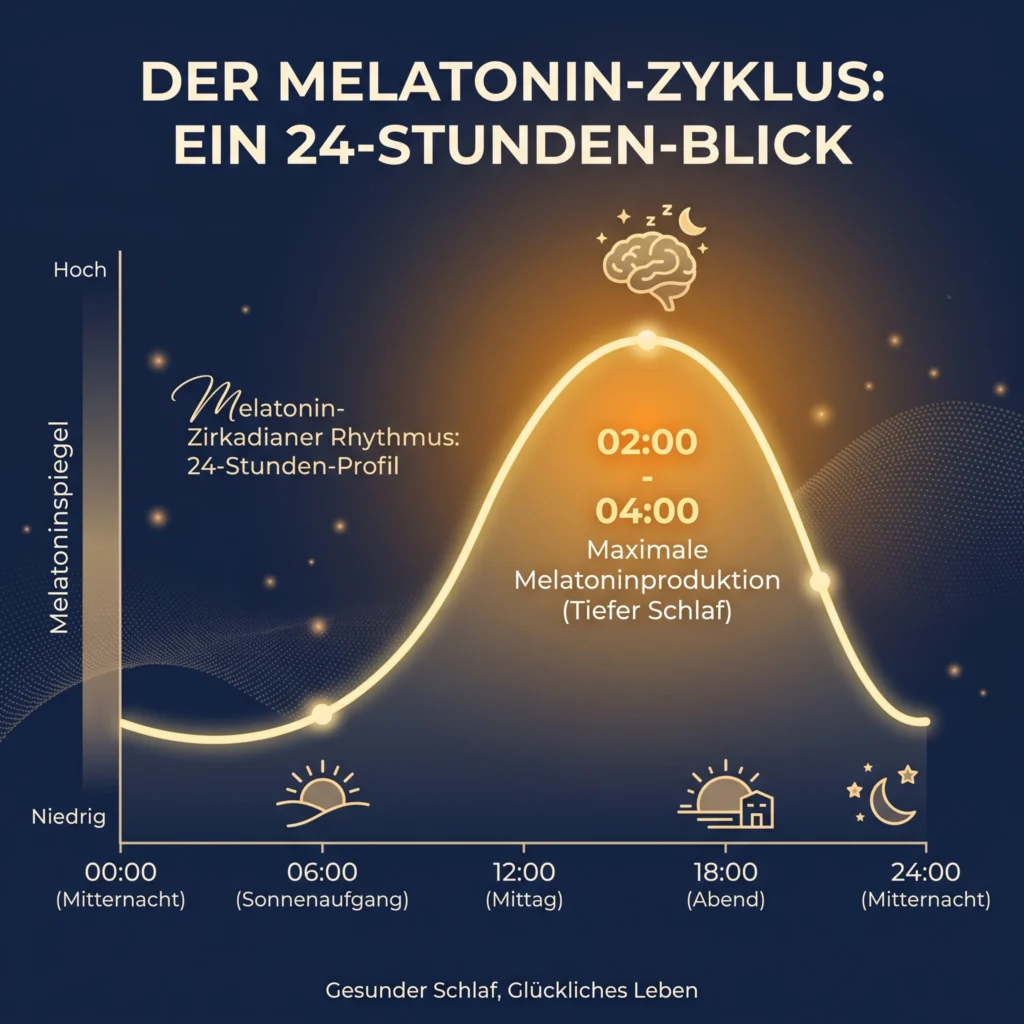
Do you frequently wake up during the night? Do you toss and turn for hours before finally falling asleep? If so, an imbalance in your natural melatonin levels could be a possible cause. Melatonin is the body’s own sleep hormone that helps regulate your day-night rhythm and is essential for restorative sleep. The good news: you can support your melatonin levels naturally – without any supplements or medication. In this article, you’ll learn how simple changes to your habits can help you achieve better sleep.
What is melatonin and why is it so important?
Melatonin is a hormone produced primarily in the pineal gland (epiphysis) of your brain. It acts as the body’s own timekeeper, signaling to your organism when it’s time to sleep. As soon as it gets dark, your body begins producing melatonin. Hormone levels rise continuously throughout the evening, typically peaking between 2 and 4 a.m., then falling again by morning.
However, this finely tuned system can be thrown off balance by various factors. Artificial light, irregular sleep schedules, stress, certain medications, and increasing age can all impair natural melatonin production. The result: you may have trouble falling asleep, wake up more frequently, and feel exhausted the next day.
Using light intelligently: the key to melatonin production
Light is the most important external factor influencing your melatonin production. Your body is particularly sensitive to short-wave blue light, which occurs naturally in sunlight during the day and suppresses melatonin release. In the evening, however, your body should receive the signal that it’s time to produce melatonin.
Daylight as a natural timekeeper
Start your day with plenty of natural daylight. Whenever possible, spend at least 15 to 30 minutes outdoors – or at least near a window – within the first hour after waking up. Bright morning light not only suppresses any remaining melatonin and wakes you up, but also helps synchronize your internal clock. This can improve melatonin production in the evening – an effect that numerous studies have been able to confirm.
Reducing blue light in the evening
About two to three hours before bedtime, you should start dimming the lights in your home. Avoid bright, white light and instead opt for warm white or reddish light sources. Particularly important: reduce your use of smartphones, tablets, computers, and televisions, as their screens emit a lot of blue light.
If you can’t or don’t want to give up electronic devices in the evening, there are practical tools available: activate the blue light filter or night mode on your devices, use apps like f.lux for your computer, or wear blue light filtering glasses. These measures can reduce the disruptive effects of blue light.
Eating for better sleep: foods that can promote melatonin
Your diet plays a more important role in your sleep than you might think. Some foods not only contain small amounts of melatonin itself, but also its precursors and building blocks.
Tryptophan-rich foods
Tryptophan is an essential amino acid that your body cannot produce on its own. It is the precursor for the production of serotonin, which in turn is converted into melatonin. Foods particularly rich in tryptophan include turkey, chicken, eggs, cheese, nuts (especially cashews and walnuts), seeds (particularly pumpkin seeds and sunflower seeds), legumes, oats, and soybeans.
Melatonin-containing foods
Some foods actually contain melatonin, albeit in small amounts. These include tart cherries and tart cherry juice – they are among the most melatonin-rich foods available. Studies show that tart cherry juice in the evening can support sleep quality. Other sources include walnuts, pistachios, tomatoes, peppers, mushrooms, and certain grains such as oats and rice.
Magnesium and vitamin B6
These two nutrients are cofactors in the conversion of tryptophan to serotonin and melatonin. Magnesium-rich foods include leafy green vegetables (such as spinach), almonds, avocados, bananas, whole grain products, and dark chocolate. Vitamin B6 can be found in salmon, tuna, bananas, chickpeas, potatoes, and whole grain products.
What you should avoid
Avoid heavy, high-fat meals in the evening, as well as caffeine and larger amounts of alcohol. Caffeine blocks adenosine receptors and can impair melatonin production. The effects of caffeine can last anywhere from 3 to 7 hours, depending on the individual. While alcohol may initially make you feel sleepy, it disrupts sleep architecture and can impair sleep quality during the second half of the night.
Creating the right sleep environment
Your bedroom should be a cave – dark, cool, and quiet. These conditions are optimal for good melatonin production.
Aim for as much darkness as possible
Even small light sources can interfere with your melatonin production. Invest in blackout curtains or blinds. Remove or cover glowing LEDs from electronic devices. If you can’t eliminate all light sources, a comfortable sleep mask can be a good alternative.
The optimal temperature
A cooler room temperature is ideal for melatonin production and good sleep. Experts recommend around 61 to 67 degrees Fahrenheit (16 to 19 degrees Celsius), though individual preferences may vary slightly. A slight drop in your core body temperature in the evening is a natural signal that accompanies melatonin release. A bedroom that is too warm can disrupt this process.
Lifestyle habits that can optimize your melatonin levels
Maintaining regular sleep times
Your internal clock thrives on routine. Try to go to bed at a similar time each day and wake up at a similar time – even on weekends. This regularity stabilizes your circadian rhythm and can optimize the natural release of melatonin. After a few weeks, your body will adjust, so that you naturally begin to feel tired at the right time.
Exercise at the right time
Regular physical activity has been shown to improve sleep quality and can promote melatonin production. Morning or late-morning exercise outdoors is particularly effective, as you also benefit from daylight at the same time. However, avoid intense physical exertion in the two to three hours before bedtime, as this has an activating effect and can make it harder to fall asleep.
Stress management and relaxation
Chronic stress raises cortisol levels, which can inhibit melatonin production. Establish evening relaxation rituals such as meditation, progressive muscle relaxation, gentle yoga exercises, or breathing techniques. A warm bath about 60 to 90 minutes before bedtime can also be helpful: the subsequent cooling of your body mimics the natural drop in temperature and can support melatonin release.
Avoiding late screen time
Establish a screen-free period of at least one hour before bedtime. Use this time for analog activities such as reading (under warm light), light household tasks, conversations with your partner or family, or the relaxation techniques mentioned above.
Special situations: shift work and jet lag
If you work shifts or frequently cross time zones, your melatonin rhythm is under particular strain. In these cases, the strategies mentioned above are even more important. Light therapy lamps can help reset your rhythm after night shifts. Wear sunglasses on your way home after a night shift to prevent morning light from sending the wrong signal. When dealing with jet lag, it can help to gradually adjust to the new time zone a few days before your trip and to immediately follow the local day-night rhythm at your destination.
When should you see a doctor?
Natural methods to support melatonin levels are safe for most people. However, if you consistently apply these strategies but still suffer from persistent sleep problems for more than four weeks, you should seek medical advice. Medical evaluation is also important if you suspect a sleep disorder such as sleep apnea or restless legs syndrome, or if you have other health concerns.
Conclusion: your natural path to better sleep
Supporting your natural melatonin levels isn’t rocket science – it’s a matter of developing the right habits. The most important levers are using light wisely – plenty of it in the morning, little in the evening – along with a sleep-promoting diet, an optimal sleep environment, and regular sleep times.
The key to success lies in consistency. Your body needs time to adjust to new routines. Don’t expect your sleep to improve dramatically overnight. Give the changes at least two to three weeks to take effect.
The best approach is to start by choosing two or three of the strategies presented here that you find easiest to implement. Once these have become established habits, you can add more. With patience and consistency, you may find that your body learns once again to produce sufficient melatonin at the right time – for restorative sleep and more energy throughout the day.
Dieser Ratgeber dient ausschließlich zu Informationszwecken und ersetzt keine medizinische Beratung oder Diagnose. Bei anhaltenden Beschwerden konsultieren Sie bitte einen Arzt. Nahrungsergänzungsmittel und Heilpflanzen sollten nicht ohne Rücksprache mit einem Therapeuten eingenommen werden.