
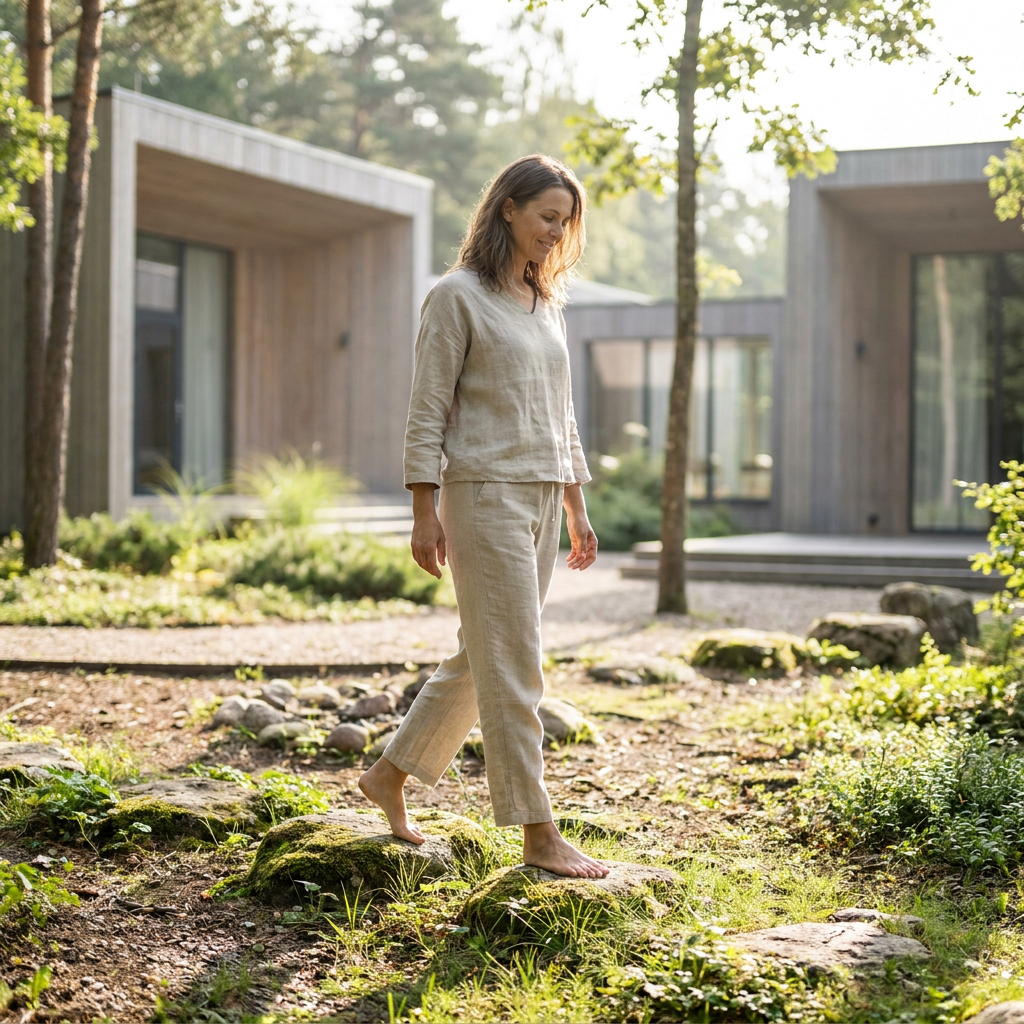
Do you know the feeling of walking barefoot across a meadow, feeling fresh grass beneath your feet, or strolling through sand on the beach? What many people experience as pure nostalgia or simply pleasant has an actual scientific basis: grounding, or so-called “earthing,” is a fascinating concept that is receiving increasing attention in the health world. It involves direct physical contact with the earth’s surface and the potentially positive effects on your body and mind. In this article, you’ll discover what lies behind the trend of barefoot walking and grounding, and how you can use this ancient practice for your health.
What Does Grounding or Earthing Mean?
Grounding refers to the direct physical contact of your body with the earth’s surface. Through skin-to-earth contact, you absorb the earth’s natural electrical charge. This may sound unusual at first, but it is based on scientific findings about the electrical properties of our bodies and the earth.
The earth’s surface carries a negative electrical charge and is a source of free electrons. When you walk barefoot on grass, sand, soil, or stone, you enable a flow of electrons between the earth and your body. The theory suggests that these electrons act as antioxidants and may potentially neutralize free radicals that form in your body through various metabolic processes and environmental influences.
The Electrical Connection Between Humans and the Earth
Our modern lifestyle has increasingly isolated us from the earth. We wear shoes with insulating rubber soles, live in high-rise buildings, travel in cars, and spend most of our time indoors. According to some researchers, this isolation from the natural electrical environment could lead to an altered electrical balance in our bodies.
Your body is naturally an electrical system. Your nervous system, your heart, and every single one of your cells function through electrical impulses. The theory behind grounding suggests that contact with the earth could help influence your body’s electrical balance.
The Health Benefits of Walking Barefoot
Walking barefoot offers far more than just an electrical connection to the earth. It is a holistic practice that can positively influence various aspects of your health.
Improving Foot Health and Posture
When you walk barefoot regularly, you train the muscles of your feet in a natural way. Modern shoes, especially those with heavy cushioning and support features, can weaken the foot muscles by taking over much of the work. When walking barefoot, however, all 26 bones, 33 joints, and over 100 muscles, tendons, and ligaments in your feet are activated and strengthened.
This natural form of movement can also improve your posture. Your feet are the foundation of your body, and when they function properly, this can have a positive effect on your overall body alignment. Some people report reduced back, knee, and hip pain after they begin walking barefoot regularly.
Strengthening the Immune System
Contact with various natural surfaces exposes your immune system to a broad spectrum of microorganisms. This may sound concerning at first, but it can actually train your immune system. This concept aligns with the “hygiene hypothesis,” which states that a certain level of contact with microbes may be important for the development of a robust immune system.
Potential Reduction of Inflammation and Chronic Pain
Several smaller studies have examined whether grounding has anti-inflammatory effects. Some results suggest that the transfer of electrons from the earth into your body could reduce oxidative stress. It is important to emphasize that the evidence here is still limited and that larger, controlled studies are needed.
Some smaller studies showed that participants who were regularly grounded may have experienced a reduction in inflammatory markers in the blood. Additionally, some participants reported reduced chronic pain, particularly with conditions such as fibromyalgia. These results, however, should be considered preliminary.
Potential Improvement in Sleep Quality
Another interesting aspect of grounding is its potential influence on your sleep. Smaller studies have shown that people who ground themselves regularly may experience an improvement in their sleep quality. This could be related to the possibility that grounding influences cortisol levels — your stress hormone — and puts your body into a more relaxed state.
Some users report falling asleep faster, experiencing fewer nighttime interruptions, and feeling more refreshed in the morning. However, these effects have not yet been conclusively confirmed by science.
Practical Tips for Your Grounding Routine
Are you curious and want to integrate grounding into your life? Here are practical guidelines on how to get started.
The Best Surfaces for Grounding
Not all surfaces are equally suitable for grounding. Particularly conductive surfaces include:
Grass, especially when it is moist with dew, offers good conductivity. Beach sand is also suitable, particularly near water. Bare soil, whether in your garden or on a forest path, allows for direct contact. Stones and rocks are also conductive.
Asphalt and concrete, on the other hand, are less suitable, although they can offer some conductivity when wet. Wood, rubber, plastic, and vinyl insulate and interrupt the electrical connection to the earth.
How Long and How Often Should You Ground Yourself?
There are no scientifically proven guidelines, but proponents recommend spending 20 to 30 minutes barefoot on natural ground every day. The beauty of grounding is that it can easily be integrated into your daily routine: a short walk in the park during your lunch break, drinking your morning coffee barefoot in the garden, or relaxing on the lawn in the evening.
If you are just starting out, begin slowly. Your feet need time to adjust to the new demands, especially if you have spent most of your life wearing shoes. Gradually increase the duration and intensity to avoid injuries or overuse.
Safety When Walking Barefoot
While walking barefoot can offer many benefits, you should also pay attention to safety. Watch where you step and avoid areas with broken glass, sharp stones, animal waste, or other hazardous objects. Start on soft, yielding surfaces such as grass or sand before venturing onto harder surfaces.
If you have diabetes, peripheral neuropathy, circulatory disorders, or other conditions that affect the sensitivity of your feet, be sure to consult your doctor beforehand, as reduced sensitivity increases the risk of injury. You should also wait until any open wounds on your feet have fully healed before walking barefoot.
Grounding in Winter and in Bad Weather
You may be wondering how to maintain grounding in winter or during bad weather. There are actually several options:
Wet snow is conductive and theoretically allows for grounding — however, you should only do this for very short periods if you are healthy and have gradually accustomed yourself to it. The risk of frostbite and hypothermia is real and should not be underestimated. If in doubt, consult a doctor.
An alternative is to use specialized grounding products such as grounding mats, sheets, or patches that you can use in your home. These are connected via a cable to the grounding port of an electrical outlet and are intended to provide similar effects to walking barefoot directly on the earth. However, scientific research on these products is very limited, so their effectiveness cannot yet be conclusively assessed.
What Does Science Say About Grounding?
Research on grounding is still in its early stages. There are some smaller studies with promising indications of possible effects such as reduced inflammatory markers, improved circulation, decreased stress, and better sleep. However, these studies often have methodological limitations.
Critics rightly point out that many studies have small sample sizes, were often not conducted double-blind, and that the placebo effect could play a significant role. There is definitely a need for larger, methodologically rigorous, and independent studies to fully understand and confirm the mechanisms and effects of grounding.
Nevertheless: the practice of walking barefoot in nature is low-risk (when safety guidelines are followed) and offers proven benefits for foot health, posture, and general well-being through movement and contact with nature. Spending time in nature itself already has well-documented positive effects on both mental and physical health.
Grounding as Part of a Holistic Lifestyle
Grounding should not be viewed as a miracle cure or a substitute for medical treatment, but rather as a possible element of a healthy, nature-connected lifestyle. It can complement other health-promoting practices such as a balanced diet, sufficient exercise, good sleep, and stress management — but it cannot replace them.
What makes grounding special is that it connects you with nature and reminds you that you are part of a larger ecosystem. In our increasingly digitalized world, estranged from nature, this simple practice can play a role in bringing more mindfulness and a connection to nature into your everyday life.
The psychological benefits of spending time barefoot in nature — the feeling of freedom, mindfulness for the present moment, the connection with the earth — are just as valuable as the possible physiological effects.
Conclusion: Back to Our Roots
Grounding and walking barefoot offer a simple, free, and enjoyable way to spend time in nature while potentially promoting your health. Whether the effects are primarily based on electron transfer, improved foot health, time spent in nature, or a combination of all these factors — the practice is low-risk when safety guidelines are followed and can support your well-being.
Start slowly, listen to your body, and enjoy the primal feeling of sensing the earth beneath your feet. In a world where we are constantly searching for complex solutions to our health problems, a simple return to natural behaviors can sometimes be deeply beneficial.
Give it a try: take some time today for a short barefoot walk in the park or in your garden. Consciously notice the texture of the ground, the temperature, the moisture. Observe how your body and mind feel in the process. Perhaps you will rediscover an old, forgotten connection to nature that can benefit your well-being in many different ways.
Dieser Ratgeber dient ausschließlich zu Informationszwecken und ersetzt keine medizinische Beratung oder Diagnose. Bei anhaltenden Beschwerden konsultieren Sie bitte einen Arzt. Nahrungsergänzungsmittel und Heilpflanzen sollten nicht ohne Rücksprache mit einem Therapeuten eingenommen werden.