
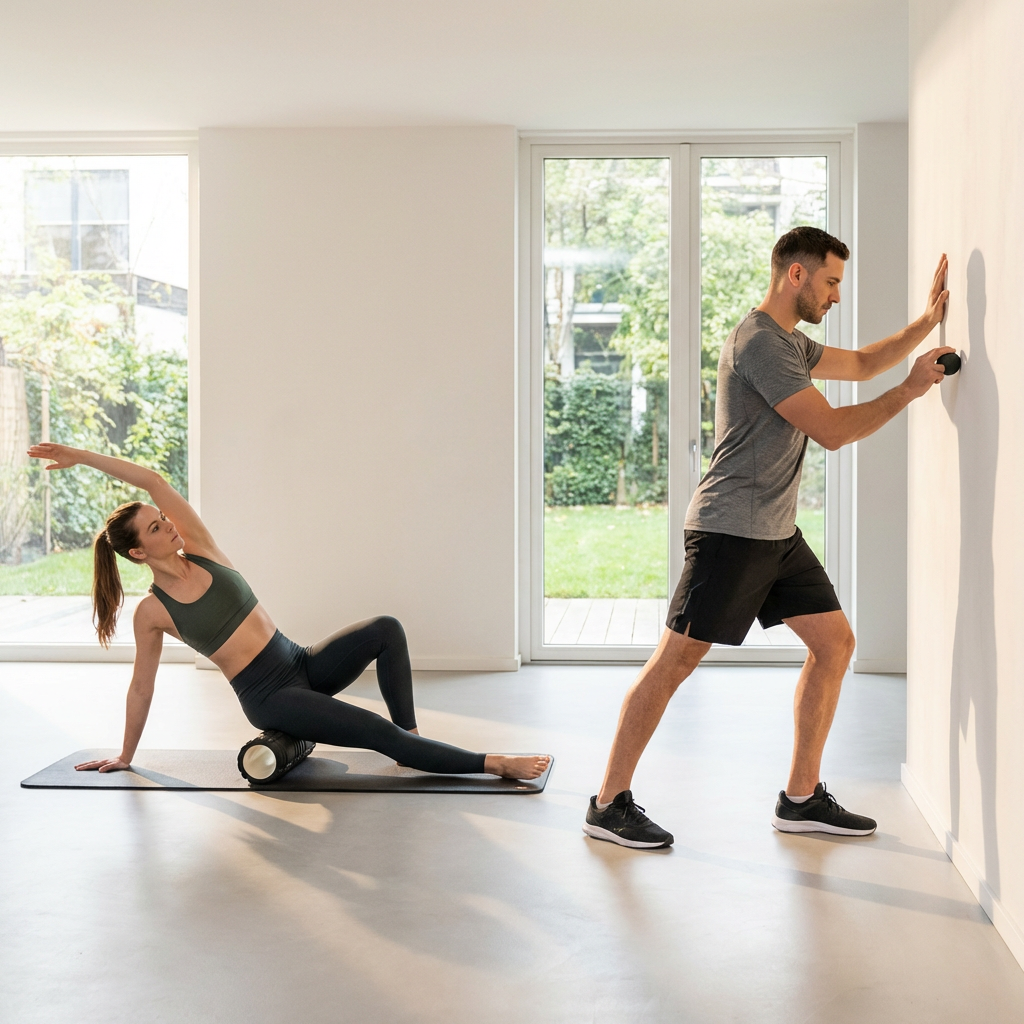
Tense muscles, chronic back pain or limited mobility – many of these complaints can be related to adhesions or hardened fascia. For a long time, these connective tissue structures were hardly noticed in medicine, but today we know: fascial training can be an effective approach to pain relief. In this article, you’ll learn everything important about fascia, how targeted training works and which exercises can help you.
What is fascia and why is it so important?
Fascia is collagen-rich connective tissue structures that run through your entire body like a three-dimensional network. They envelop muscles, organs, bones and even individual muscle fibers. Imagine fascia as the body’s own “packaging” that gives everything its shape while providing stability and mobility.
These fascinating structures consist mainly of collagen fibers, elastin and a gel-like ground substance. They are equipped with numerous nerve endings and play an important role in pain perception. Fascia actually contains significantly more pain receptors than the muscles themselves – one reason why problems in fascial tissue can be so painful.
The diverse functions of your fascia
Your fascia performs far more tasks than you might suspect. They serve as shock absorbers, transmit force between muscles, store kinetic energy and give your body its shape. They are also important for proprioception – your ability to perceive the position of your body in space.
Healthy fascia is elastic, glides smoothly and is well hydrated. It enables smooth movements and contributes to force transmission. When you jump or run, it functions like a spring system that stores and releases energy.
When fascia causes problems: causes and symptoms
Fascia can lose its healthy properties. Due to lack of movement, one-sided strain, stress or injuries, it can become adhesive, harden or lose its flexibility. The result: it loses its elasticity and gliding ability.
The most common causes of fascial problems include:
Lack of movement is a major factor for fascial problems. If you move too little, the connective tissue receives poorer blood circulation and fewer nutrients. The result can be adhesions and hardening. One-sided movement patterns, such as sitting at a desk for long periods, also strain your fascia. They adapt to frequently assumed positions and can lose their flexibility in the process.
Stress and psychological strain also have an effect. During stress, your muscles and fascia tense up – if this condition persists for a long time, the tension can manifest itself in the tissue. Injuries, operations and inflammation can lead to scar formation in the fascial tissue, which restricts mobility.
Typical symptoms of adhesive fascia
Adhesive or hardened fascia can manifest itself in various ways. You could suffer from diffuse pain that cannot be clearly localized and is often described as “dull” or “pulling”. Many sufferers report stiffness and restricted mobility, especially in the morning or after prolonged sitting.
Chronic back pain, neck tension, joint pain without apparent structural cause or a feeling of immobility can also indicate fascial problems. Sometimes the body feels as if it’s trapped in a suit that’s too tight.
The principles of fascial training
Fascial training is based on four scientifically founded principles developed by Dr. Robert Schleip and his team. These approaches aim to improve the elasticity, gliding ability and regenerative capacity of your fascia.
Fascial Stretch – stretching with momentum
Unlike classical static stretching, Fascial Stretch involves dynamic, bouncing movements. These bouncing stretches can optimally stimulate the fascia and stimulate the production of hyaluronic acid, which is important for the gliding ability of the tissues. Think of movements like shaking out after waking up or cat-like stretching movements.
Rebound Elasticity – springy movements
Jumps, hops and bouncing movements train the elastic properties of your fascia. They utilize the springy properties of the connective tissue and can improve the storage and release of kinetic energy. Jump rope, light hops or bouncing squats are exercises for this principle.
Fascial Release – self-massage with the foam roller
The foam roller is the most well-known tool in fascial training. Through targeted pressure on the tissue, you can release adhesions and hardening. This self-massage can improve blood circulation, promote the removal of metabolic waste products and make the tissue more supple again.
Sensory Refinement – training body awareness
Fascia is rich in receptors and plays an important role in your body awareness. Through slow, mindful movements and conscious awareness exercises, you can improve communication between brain and body. This can also contribute to pain relief.
Practical exercises for your fascial training
Now it gets concrete: with these exercises you can start training your fascia and possibly reduce pain.
Exercises with the foam roller
For your back, lie on the floor and place the foam roller under your upper back. Support yourself with your feet and roll slowly from your neck to your lumbar spine. Stay on painful spots for 20-30 seconds. Make sure not to roll directly over the spine, but to the side of it.
For thigh problems, sit on the roller and roll over the back of your thighs. This exercise can be particularly effective against tension after prolonged sitting. For your calves, place the roller under one calf, place the other leg on top and roll from the Achilles tendon to the back of the knee.
Dynamic stretching exercises
The full-body stretch is a simple but effective exercise: stand upright and stretch your arms above your head. Pull yourself long, as if you want to grow to the ceiling, and bounce slightly. Then lean alternately to the left and right. This exercise stretches the entire lateral fascial chain.
For the back of your body, the dynamic forward bend is suitable: stand with slightly bent knees and roll forward vertebra by vertebra. Let your arms hang loosely and bounce gently downward. Then slowly roll back up.
Bouncing movements for elasticity
Light trampoline jumping or bouncing in place are exercises for the elasticity of your fascia. Start with gentle movements and gradually increase the intensity. Bouncing lunges, where you bounce slightly in the deep position, can also train the fascial structures.
Exercises for body awareness
Try slow, flowing movements from yoga or tai chi. The cat-cow exercise from yoga is particularly valuable: get into a quadruped position and move your spine slowly back and forth between rounding and stretching. Consciously feel how each vertebra moves.
How to integrate fascial training into your daily life
Fascial training doesn’t have to be time-consuming. Just 10-15 minutes two to three times a week can bring improvements. More important than long sessions is regularity.
Integrate short exercise sequences into your daily routine: use two minutes in the morning after waking up for dynamic stretching exercises. During your lunch break, you can work with the foam roller, especially if you sit a lot. In the evening before going to bed, gentle stretching exercises and rolling massages are suitable for relaxation.
Important tips for effective training
Always start gently and gradually increase the intensity. Especially when rolling, it can be uncomfortable at first – a certain feeling of pressure is normal, but it should remain bearable. Avoid exercises directly on bones or joints and listen to your body.
Fascial training should never be acutely painful. Work in the “pleasantly-unpleasant” range – a feeling where you can still breathe relaxed. Combine the training with sufficient fluid intake, because fascia needs water to maintain its gliding ability.
Complementary measures for healthy fascia
In addition to targeted training, there are other factors that can influence the health of your fascia. Sufficient movement in everyday life is fundamental – try not to sit for longer than 60 minutes at a time. Short movement breaks can keep your fascia supple.
Nutrition also plays a role. Vitamin C supports collagen formation, while omega-3 fatty acids can have anti-inflammatory effects. Sufficient protein provides the building blocks for the regeneration of connective tissue. Pay attention to a balanced diet with plenty of vegetables, fruit and high-quality protein sources.
Stress management is also important, as chronic stress can lead to permanent muscle and fascial tension. Relaxation techniques such as progressive muscle relaxation, meditation or breathing exercises can have a supporting effect here.
When you should seek professional help
Fascial training is an excellent self-help tool, but does not replace a doctor’s visit if serious complaints are present. Consult a doctor or physiotherapist if your pain is very severe or worsening, if it occurs after an accident or trauma, or if it is accompanied by numbness, tingling or paralysis.
Even with pain that persists for longer than a few weeks, you should seek professional help. A physiotherapist can perform an individual analysis and create a training program tailored to your needs.
Conclusion: Your path to more mobility through fascial training
Fascial training is a scientifically founded approach that can contribute to pain relief and improve your mobility. The combination of rolling massages, dynamic stretches, bouncing movements and body awareness exercises has a holistic effect on your connective tissue.
The key to success lies in regularity: just a few minutes daily can make a difference. Always listen to your body and gradually increase the intensity. Fascial training is not a sprint, but a long-term process – you achieve the best results through consistent training.
Start today with simple exercises and observe how your mobility may improve and pain may decrease. With regular training, you can feel more mobile, relaxed and vital overall. The path to more well-being begins with the first step – or rather, with the first roll over your fascia.
Dieser Ratgeber dient ausschließlich zu Informationszwecken und ersetzt keine medizinische Beratung oder Diagnose. Bei anhaltenden Beschwerden konsultieren Sie bitte einen Arzt. Nahrungsergänzungsmittel und Heilpflanzen sollten nicht ohne Rücksprache mit einem Therapeuten eingenommen werden.