
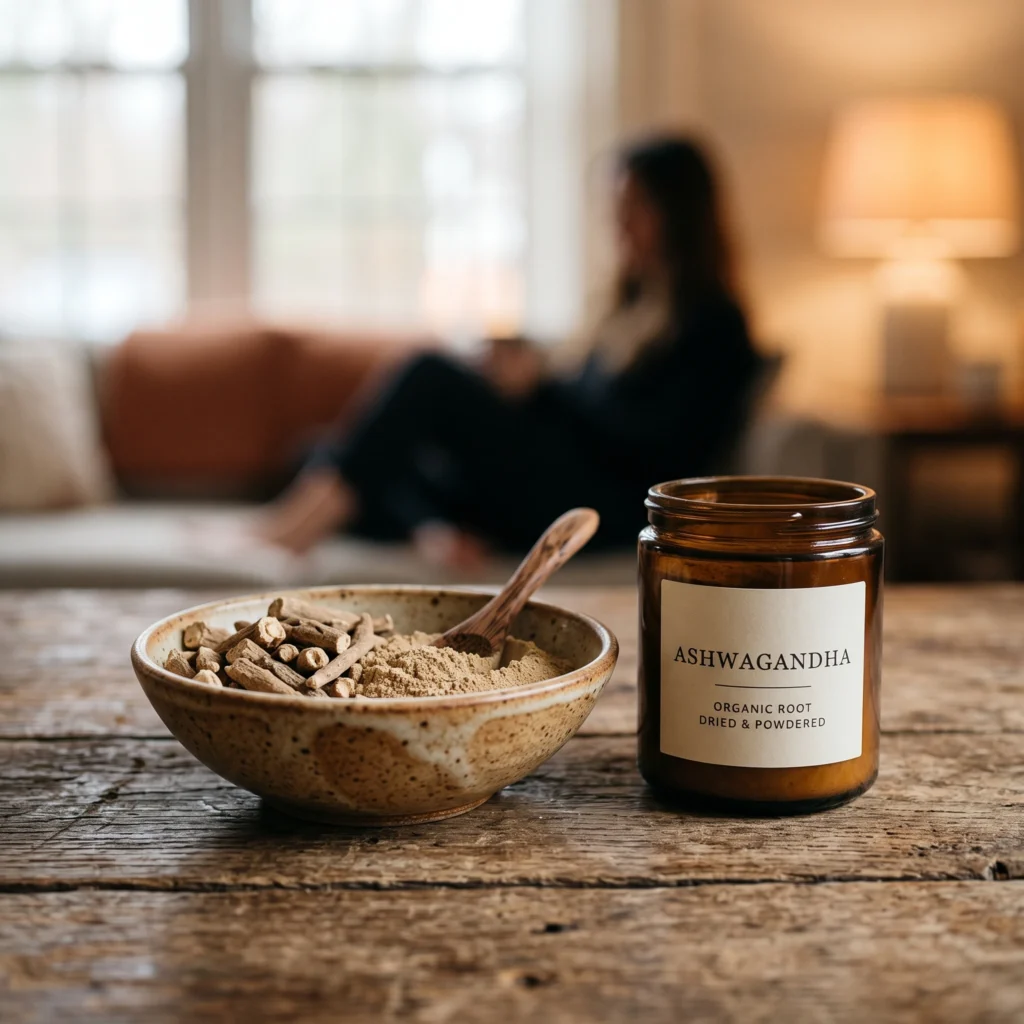
Stress is part of everyday life for many people – whether at work, in the family, or through personal challenges. If you frequently feel stressed, overwhelmed, or exhausted, you are not alone. More and more people are looking for natural ways to restore their inner balance and cope better with burdens. This is where ashwagandha comes in: the Ayurvedic medicinal plant has been regarded for thousands of years as a powerful remedy against stress and is increasingly being studied in modern research as well. In this article, you will learn how ashwagandha can work against stress, how to use it correctly, and what science has to say about it.
What is Ashwagandha?
Ashwagandha, also known as Indian ginseng or winter cherry, bears the botanical name Withania somnifera. The plant belongs to the nightshade family and originates from India, the Middle East, and parts of Africa. In Ayurveda, the traditional Indian healing system, ashwagandha has been valued for over 3,000 years as one of the most important rasayanas – that is, as a rejuvenating and strengthening remedy.
The name “ashwagandha” is composed of the Sanskrit words “ashva” (horse) and “gandha” (smell) and literally means “smell of the horse.” On one hand, this refers to the characteristic odor of the fresh root; on the other hand, it symbolizes the strength and vitality of a horse that the plant is said to impart.
In modern naturopathic medicine, ashwagandha is classified among the adaptogens. Adaptogens are plant-based substances that can help the body adapt better to stressful situations and increase both physical and mental resilience.
How Does Ashwagandha Work Against Stress?
The stress-reducing effect of ashwagandha is based on various mechanisms that take place at the biochemical level in the body. Let us take a closer look at the most important modes of action.
Regulation of Stress Hormones
The primary mechanism of action of ashwagandha lies in its influence on the hypothalamic-pituitary-adrenal axis (HPA axis). This axis is the central stress-processing system of your body. Under chronic stress, this axis can become overactivated, leading to elevated cortisol levels.
Cortisol is your primary stress hormone – important for the stress response in the short term, but problematic in persistently high amounts over the long term. Studies show that ashwagandha can lower cortisol levels. In a randomized, double-blind, placebo-controlled study with 64 individuals experiencing chronic stress, cortisol levels in the ashwagandha group dropped by an average of 27.9% compared to the placebo group after 60 days.
Modulation of the GABA System
Ashwagandha also influences the GABAergic system in your brain. GABA (gamma-aminobutyric acid) is an important calming neurotransmitter that dampens overactivity in the nervous system. The withanolides in ashwagandha – the plant’s main active compounds – can influence GABA receptors and support their calming effects. This may explain the relaxing effect of the medicinal plant.
Antioxidant and Neuroprotective Properties
Chronic stress leads to oxidative stress in your body, meaning an excess of free radicals that can damage cells. Ashwagandha possesses antioxidant properties and can protect nerve cells from stress-related damage. In the long term, this can contribute to the preservation of your cognitive functions and mental health.
Improvement of Stress Resilience
As an adaptogen, ashwagandha supports your body in maintaining homeostasis – that is, its internal balance. It does not act in a sedating or overly stimulating manner, but can instead help your system respond more flexibly to stressors and return to balance more quickly.
What Does Science Say?
The traditional use of ashwagandha is increasingly being examined through modern scientific studies. Here are some important research findings:
Studies on Stress and Anxiety
A systematic review from 2014 analyzed five randomized, controlled studies on the effects of ashwagandha on stress and anxiety. The result: all studies showed a significant reduction in stress and anxiety symptoms compared to placebo.
A study with 60 participants suffering from chronic stress showed significant improvements after 60 days of taking a highly concentrated ashwagandha root extract (300 mg twice daily). Participants reported reduced perceived stress, better sleep quality, and improved quality of life. Objective measurements also showed significantly lower cortisol levels.
Dosages Used in Studies
In most scientific investigations, dosages of between 240 and 600 mg of standardized ashwagandha extract per day were used, typically divided into two doses. Some studies also worked with higher doses of up to 1,250 mg per day. Effects were typically observed after four to twelve weeks of regular intake.
Other Studied Effects
In addition to stress reduction, studies show further possible benefits of ashwagandha: improvement of sleep quality in people with sleep problems, enhancement of physical performance and muscle strength, support of cognitive functions such as memory and reaction time, possible positive effects on thyroid function in subclinical hypothyroidism, and potential improvement in states of exhaustion.
Correct Use and Dosage
If you would like to try ashwagandha for stress, proper use is important.
Forms of Administration
Ashwagandha is available in various forms. Capsules or tablets with standardized extract are the most common and practical form. Powder made from the dried root can be stirred into smoothies, warm milk, or water. Tinctures are alcohol- or glycerin-based extracts. Teas made from ashwagandha root are less common.
Recommended Dosage
Based on scientific studies, the typical dosage for adults is 300 to 600 mg of standardized extract per day, usually divided into two doses (e.g., 300 mg in the morning and evening). For powder, 3 to 5 grams per day are traditionally recommended, although the concentration of active compounds is more variable here. It is advisable to start with a lower dose and increase it after a few days if needed. Intake can take place in both the morning and evening – some people prefer evening intake due to its calming effect.
Intake Notes
For better absorption, it is recommended to take ashwagandha with a meal. Give your body time: the effects may become apparent in some people after as little as two weeks, while in others it may take eight to twelve weeks of regular intake. For sustainable effects, a period of use of at least eight weeks is recommended.
Pay Attention to Quality When Purchasing
When purchasing, look for standardized extracts with a defined withanolide content (usually 5% or more). Prefer products with quality seals and independent laboratory testing for purity and active ingredient content. Organic quality is recommended to avoid pesticide contamination. Reputable manufacturers provide precise information about the origin and processing of their products.
Side Effects and Contraindications
Ashwagandha is considered largely safe and well-tolerated when used properly. Nevertheless, there are some points to keep in mind.
Possible Side Effects
At recommended dosages, side effects are rare and usually mild. Occasional occurrences may include: mild gastrointestinal complaints such as nausea or diarrhea, especially at the beginning of use or when taken on an empty stomach, drowsiness in some individuals, or rarely headaches.
Who Should Avoid Ashwagandha or Seek Medical Advice?
There are certain groups for whom ashwagandha is not suitable, or only suitable after medical consultation. Pregnant women should avoid ashwagandha, as in high doses it may potentially have labor-inducing properties. Sufficient safety data is also lacking for breastfeeding. People with autoimmune diseases should seek medical advice before use, as ashwagandha can modulate the immune system.
Caution is advised for thyroid conditions, particularly hyperthyroidism, as ashwagandha can influence thyroid hormone levels. Medical monitoring of thyroid values is recommended. Individuals taking medications – especially sedatives, thyroid medications, immunosuppressants, or blood sugar-lowering drugs – should discuss possible interactions with their doctor. Before planned surgery, ashwagandha should be discontinued at least two weeks beforehand, as it could potentially enhance the effects of anesthetics.
Ashwagandha in Combination with Other Measures
For optimal results in stress management, you should not view ashwagandha in isolation, but rather as part of a holistic approach.
Lifestyle Factors
Combine its use with relaxation techniques such as meditation, yoga, progressive muscle relaxation, or breathing exercises. Regular exercise – at least 150 minutes of moderate activity per week – significantly enhances the stress-reducing effect. Make sure you get enough sleep: seven to nine hours per night is ideal for most adults. A balanced, nutrient-rich diet with adequate omega-3 fatty acids, B vitamins, and magnesium additionally supports your body in managing stress.
Synergistic Plant Compounds
Ashwagandha combines well with other adaptogenic plants, such as Rhodiola rosea for additional energy and mental clarity, holy basil (tulsi) for emotional balance, or L-theanine from green tea for calm alertness without sedation. However, you should proceed cautiously with combinations and seek expert advice if in doubt.
Conclusion: Ashwagandha as a Natural Stress Aid
Ashwagandha has proven to be a potentially effective natural remedy for stress support, both in traditional use and in modern scientific studies. The medicinal plant can work on several levels: it can regulate your stress hormones, particularly by lowering cortisol, support the calming GABA system, protect your nerve cells from oxidative stress, and improve your overall stress resilience.
The body of evidence from clinical studies is promising and shows clear effects with regular intake over several weeks. Typical dosages are 300 to 600 mg of standardized extract per day. Ashwagandha is generally well-tolerated when used properly, although pregnant women, breastfeeding mothers, and people with certain pre-existing conditions or medication use should seek medical advice beforehand.
It is important to understand that ashwagandha is not a miracle cure that makes stress disappear overnight. It is rather a supportive tool that can help you cope better with burdens and rediscover your inner balance. The best results are achieved when you integrate ashwagandha into a holistic approach that also includes exercise, relaxation techniques, a healthy diet, and adequate sleep.
If you suffer from chronic stress, ashwagandha can be a valuable natural support. Start with a low dose, pay attention to quality when purchasing, and give your body time to respond to the medicinal plant. However, for persistent or severe stress symptoms, anxiety, or depressive moods, you should always seek professional medical or psychotherapeutic help as well. Stress is a serious health issue, and sometimes it takes more than herbal support to restore balance.
Dieser Ratgeber dient ausschließlich zu Informationszwecken und ersetzt keine medizinische Beratung oder Diagnose. Bei anhaltenden Beschwerden konsultieren Sie bitte einen Arzt. Nahrungsergänzungsmittel und Heilpflanzen sollten nicht ohne Rücksprache mit einem Therapeuten eingenommen werden.