
Do you sometimes feel bloated, heavy, or swollen? Do you have the feeling that your body isn’t properly eliminating water retention? Then a sluggish lymphatic system could be a possible cause. The lymphatic system is one of the most important, yet most underestimated systems in our body. It is responsible for detoxification, the removal of metabolic waste, and plays a central role in our immune system. The good news: You can activate and support your lymphatic system yourself with simple techniques – conveniently from home.
What is the lymphatic system and why is it so important?
The lymphatic system is a complex network of lymph vessels, lymph nodes, and lymph organs that runs parallel to the bloodstream throughout your entire body. Unlike the cardiovascular system, however, the lymphatic system doesn’t have its own pump like the heart. Instead, it relies on muscle movements, breathing, and external stimulation to transport lymph fluid through the body.
The main functions of the lymphatic system include the removal of metabolic waste and cell debris from tissue, regulation of fluid balance, production and transport of immune cells, as well as absorption of fats and fat-soluble vitamins from the digestive tract. When your lymphatic system isn’t functioning optimally, problems such as water retention, swelling, a weakened immune system, chronic fatigue, and slowed wound healing can occur.
Signs of a sluggish lymphatic system
Before you begin with drainage techniques, it’s helpful to know whether your lymphatic system could actually use support. Possible signs of slowed lymph flow are swollen hands, feet, or ankles, especially in the evening, a bloated feeling in the abdominal area, feelings of tightness in certain body areas, frequent colds or infections, unexplained tiredness and exhaustion, as well as a general feeling of heaviness in arms or legs.
If you notice several of these symptoms, regular activation of your lymphatic system may possibly contribute to improvement.
Manual lymphatic drainage techniques for home
Manual lymphatic drainage is a special massage technique performed by specially trained therapists. However, you can apply simplified versions yourself to stimulate your lymph flow.
The right technique for self-massage
With lymphatic drainage, gentle pressure is crucial. Unlike classic massages, you don’t work with firm pressure here, but with light, circular, and stroking movements. The lymph vessels lie directly under the skin, so gentle stroking is sufficient. The pressure should be pleasantly light – about as if you were gliding over your skin.
The direction is also important: You always massage toward the lymph nodes, which are mainly located in the groin, armpits, neck, and behind the knees. Always start with gentle activation of the lymph nodes before treating the corresponding body regions.
Lymphatic drainage for the neck and face
It’s best to start your self-massage at the neck, as important lymph nodes are located here. Place both hands on the sides of your neck and stroke with gentle pressure from the ears downward toward the collarbone. Repeat this movement five to ten times.
For the face, stroke with your fingertips from the center of the forehead to the temples, from the sides of the nose to the ears, and from the chin along the jaw to the ears. This technique can help reduce swelling in the face and provide a fresher complexion.
Lymphatic drainage for arms and hands
First activate the lymph nodes in your armpits with gentle, circular movements. Then stroke with the flat of your hand from the wrist over the forearm and upper arm toward the armpit. Perform this movement on the inside and outside of the arm, five to ten times per side.
For swollen hands, you can stroke each finger individually from the tip to the palm and then massage the entire hand toward the wrist.
Lymphatic drainage for legs and feet
The legs are particularly susceptible to lymph congestion, as the lymph here must be transported upward against gravity. Begin with activation of the inguinal lymph nodes through gentle, circular movements with both hands in the groin area.
Sit comfortably and stroke with both hands from the ankles over the calves to the knees and further over the thighs to the groin. Treat both the front and back of the legs. For swollen feet, stroke from the toes to the ankle and gently massage the entire top of the foot.
Lymphatic drainage for the abdominal area
The abdominal area plays an important role for your lymphatic system and digestion. Lie on your back and massage your abdomen in a clockwise direction with circular movements. This direction follows the course of your colon and can support both digestion and lymph flow.
Use gentle pressure and work in increasingly larger circles from the navel outward. This technique can be particularly soothing for bloating and a bloated feeling.
Other effective methods for lymphatic activation
Dry brushing – the classic
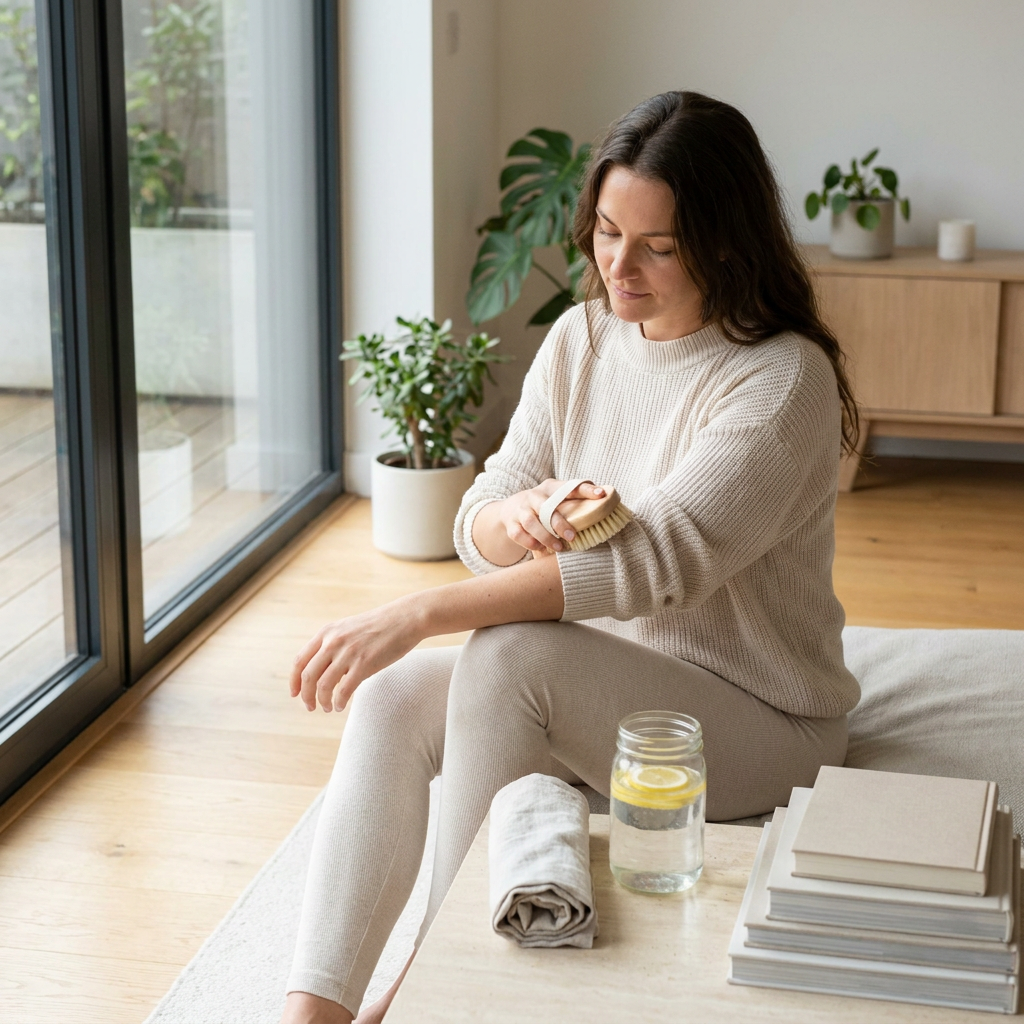
Dry brushing is one of the simplest methods for lymphatic activation. You only need a body brush with natural bristles. Brush your dry skin before showering with long, stroking movements always toward the heart.
Start at the feet and work your way up the legs, then the arms from the hands to the shoulders, and finally the trunk from bottom to top. Avoid sensitive areas such as the face, chest, and areas with skin irritations. This technique can stimulate lymph flow and also removes dead skin cells.
Movement and exercise
Since the lymphatic system has no pump of its own, movement is important for lymph flow. Particularly effective are activities that activate large muscle groups and deepen breathing. Rebounding (trampoline jumping) is often described as particularly effective for the lymphatic system, as the up and down movements can set the lymph in motion.
Yoga, walking, swimming, gentle jogging, and cycling are also well suited. Just 20 to 30 minutes of moderate movement daily can have a positive effect. Regularity is important – better a short session daily than once a week intensively.
Breathing exercises for lymph flow
Deep breathing exercises activate the diaphragm, which can have a positive effect on the lymph vessels in the abdominal cavity. Practice abdominal breathing several times daily: Breathe in deeply through the nose and let your abdomen expand. Hold your breath briefly and then breathe out slowly through the mouth while pulling in your abdomen.
Repeat this exercise for five to ten minutes. You can do it sitting, standing, or lying down. This simple technique is particularly practical because you can use it anytime and anywhere.
Alternating showers and Kneipp applications
Alternating between warm and cold can stimulate blood and lymph vessels. End your daily shower with alternating pours: Shower your legs, arms, and trunk alternately for about 30 seconds warm and 10 to 15 seconds cold. Repeat this three to five times and always end with cold water.
Always start away from the heart (at the feet) and work your way toward the heart. This method can support the lymphatic system and also stimulate your circulation.
Nutrition and hydration for a healthy lymphatic system
Your lymphatic system needs sufficient fluid to function optimally. Drink about 30 to 35 milliliters of water per kilogram of body weight daily – for most adults, this corresponds to about 1.5 to 2.5 liters. Unsweetened herbal teas are also well suited. Particularly recommended are nettle, dandelion, and green tea.
Eat a diet rich in fresh fruits and vegetables, especially those with high water content such as cucumbers, watermelons, celery, and citrus fruits. Omega-3 fatty acids from flaxseed, walnuts, chia seeds, or fatty fish like salmon and mackerel can support lymph function. On the other hand, reduce highly processed foods, excessive salt and sugar, as these can promote water retention.
When should you see a doctor?
While the presented techniques are safe for most healthy people, there are situations when you should seek professional help. For suddenly occurring, severe swelling, unilateral swelling without apparent cause, pain, redness, or warmth in the swollen area, fever in connection with swelling, or if the swelling doesn’t improve despite regular self-treatment, you should consult a doctor.
People with heart failure, acute infections, acute thrombosis, untreated hypertension, or cancer should definitely seek medical advice before using lymphatic drainage techniques. Consultation with a doctor is also advisable during pregnancy.
Your personal lymphatic activation plan
For good results, a structured approach is recommended. You can start your day with dry brushing before showering and end the shower with alternating pours. Perform a 10 to 15-minute self-massage session three to four times a week, focusing on areas that feel particularly heavy. Integrate 20 to 30 minutes of moderate movement daily and practice deep breathing exercises several times a day for five minutes each.
Pay attention throughout to adequate hydration and a balanced, nutrient-rich diet. Consistency is more important than intensity – better a small daily ritual than occasionally an intensive session.
Conclusion: Take your lymphatic system into your own hands
Your lymphatic system is an important component of your body that works around the clock for your health. With the presented techniques, you can actively support it and thereby possibly alleviate complaints such as swelling and fatigue as well as increase your overall well-being. Self-massage, dry brushing, movement, and breathing exercises are simple methods that you can integrate into your daily routine without great effort.
It’s important that you remain patient – changes take time. After several weeks of regular application, however, you may possibly notice improvements: less swelling, more energy, and an overall lighter body feeling. Start today with one of the presented techniques and make lymphatic activation a permanent part of your health routine.
Dieser Ratgeber dient ausschließlich zu Informationszwecken und ersetzt keine medizinische Beratung oder Diagnose. Bei anhaltenden Beschwerden konsultieren Sie bitte einen Arzt. Nahrungsergänzungsmittel und Heilpflanzen sollten nicht ohne Rücksprache mit einem Therapeuten eingenommen werden.