
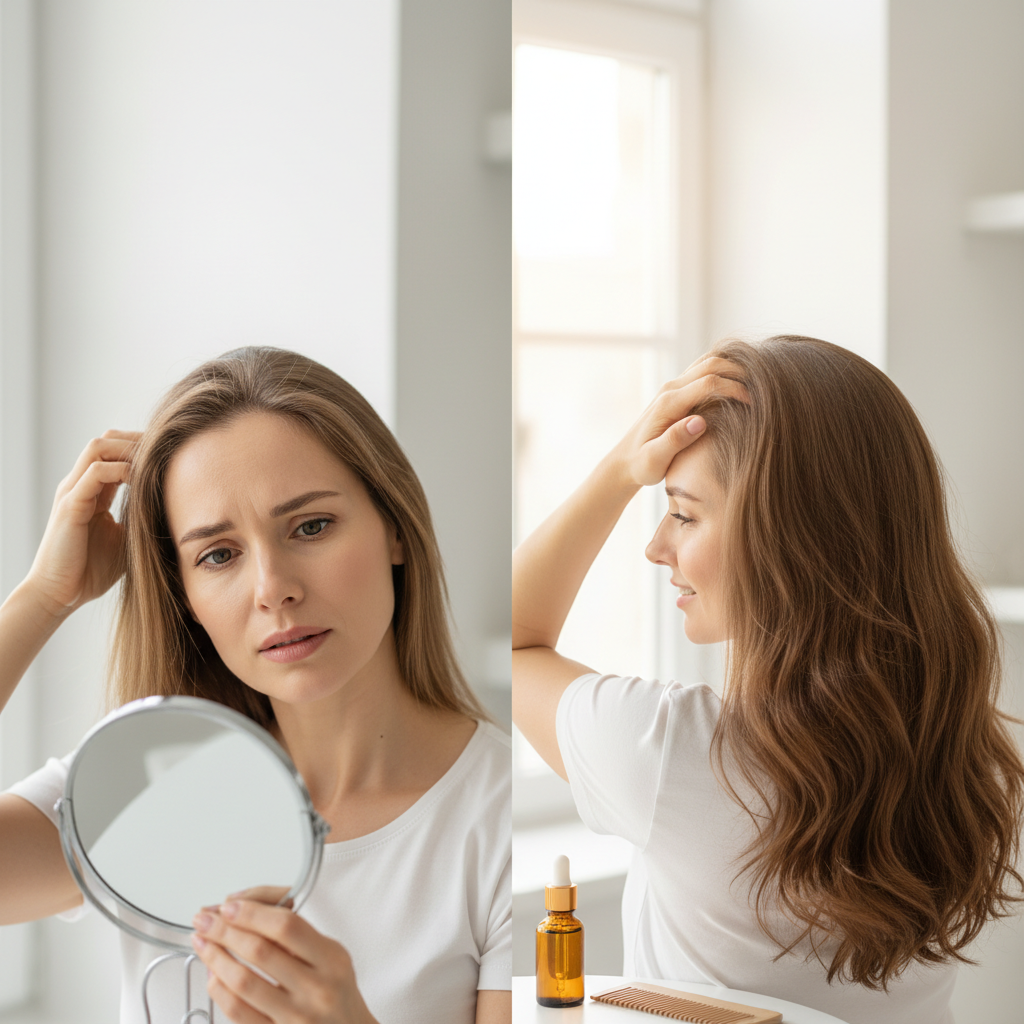
Full, healthy hair is considered a symbol of vitality and attractiveness in our society. It’s all the more distressing for those affected when their hair becomes increasingly thin or falls out in clumps. Hair loss doesn’t just affect men – more and more women are also suffering from thinning hair. The good news: in many cases, hair loss can be stopped and growth can be naturally stimulated again. This article shows you evidence-based methods and natural approaches to give your hair new strength.
Understanding the Causes of Hair Loss
Before you begin any treatment, it’s important to identify the cause of your hair loss. Losing 70 to 100 hairs daily is completely normal and part of the natural renewal cycle. It only becomes problematic when significantly more hair falls out or the regrowing hair becomes increasingly thinner.
Androgenetic Alopecia
The most common form of hair loss is androgenetic alopecia, also known as hereditary hair loss. In men, this typically manifests through receding hairline and a bald spot on the crown, while in women the parting area is usually affected. The cause is a genetically determined hypersensitivity of the hair follicles to the hormone dihydrotestosterone (DHT).
Diffuse Hair Loss
In diffuse hair loss, the hair thins evenly across the entire head. Triggers can include nutrient deficiency, stress, hormonal changes, thyroid disorders, or medications. This form is often reversible when the underlying cause is addressed.
Alopecia Areata
Alopecia areata manifests through round, bald patches on the scalp. It is an autoimmune disease in which the immune system attacks the body’s own hair follicles. Treatment usually requires medical supervision.
Optimize Nutrient Supply
Healthy hair growth is only possible when the body is supplied with all necessary nutrients. Deficiencies are among the most common and at the same time most treatable causes of hair loss.
Iron and Ferritin
Iron deficiency is a common cause of hair loss, especially in women. This trace element is essential for cell division and thus for hair growth. Ferritin levels should ideally be above 40 ng/ml, and for optimal hair growth, values above 70 ng/ml are even recommended. Good iron sources include red meat, legumes, spinach, and pumpkin seeds. Absorption is enhanced by vitamin C.
B Vitamins for Hair Health
Biotin (Vitamin B7) in particular has proven effective in treating hair loss. It strengthens hair structure and promotes growth. Other B vitamins such as B12, folic acid, and niacin also play an important role in the cellular metabolism of hair follicles. Eggs, nuts, whole grains, and legumes are excellent natural sources.
Zinc and Selenium
Zinc deficiency can lead to hair loss and brittle hair. The mineral is involved in over 300 enzymatic reactions, including hair growth. Selenium protects hair follicles from oxidative stress. Pumpkin seeds, oats, Brazil nuts, and seafood provide both trace elements in high concentrations.
Protein and Amino Acids
Hair consists of approximately 95% keratin, a protein. Adequate protein intake is therefore essential. The sulfur-containing amino acid cysteine in particular is an important building block for strong hair. High-quality protein sources include fish, poultry, eggs, legumes, and dairy products.
Natural Remedies for External Application
In addition to internal nutrition, naturally applied substances can also stimulate hair growth and keep the scalp healthy.
Rosemary Oil as a Plant-Based Alternative
Studies show that rosemary oil can be comparable in effectiveness to minoxidil, an established active ingredient against hair loss. The essential oil promotes blood circulation to the scalp and can thereby improve nutrient supply to the hair follicles. Massage diluted rosemary oil (about 3-5 drops per tablespoon of carrier oil) into the scalp twice weekly.
Castor Oil for Thicker Hair
Castor oil is rich in ricinoleic acid, which has anti-inflammatory properties and stimulates blood circulation. Regular application can lead to thicker, stronger hair. Apply the oil to the scalp, leave it on for at least one hour or overnight, and then wash it out thoroughly.
Caffeine for Stimulation
Caffeine can directly stimulate hair roots and extend the growth phase. It also blocks the effect of DHT on hair follicles. Caffeine-containing shampoos or homemade hair rinses made from cold, strong coffee can help here.
Aloe Vera for Scalp
Health Aloe vera soothes the scalp, provides moisture, and can cleanse clogged hair follicles. The gel can be applied directly to the scalp and should work for about 30 minutes before being rinsed out.
Optimize Lifestyle Factors
The best nutrients and care products cannot fully develop their effect if fundamental lifestyle factors impair hair growth.
Stress Management
Chronic stress is an underestimated factor in hair loss. It can prematurely push hair into the resting phase and lead to diffuse hair loss. Relaxation techniques such as meditation, yoga, progressive muscle relaxation, or regular exercise in nature help lower stress levels.
Adequate Sleep
During sleep, the body regenerates, including the hair follicles. Chronic sleep deprivation can lead to increased hair loss. Aim for 7-8 hours of quality sleep per night.
Promote Blood Circulation
Good blood circulation to the scalp is crucial for nutrient supply to the hair follicles. Regular scalp massages of 5-10 minutes daily can improve microcirculation. Regular exercise also promotes overall circulation.
Rethink Hair Care
Aggressive styling methods can promote hair loss. Avoid blow-drying that’s too hot, tight ponytails, and chemical treatments. Use mild, silicone-free shampoos and don’t wash your hair daily to avoid disrupting natural sebum production.
Monitor Hormone Balance
Hormonal fluctuations are a common cause of hair loss, especially in women. After pregnancy, during menopause, or with thyroid problems, increased hair loss can occur.
Check Thyroid
Both overactive and underactive thyroid can cause hair loss. Have your thyroid values (TSH, fT3, fT4) checked by a doctor if you suffer from unexplained hair loss.
Balance Estrogen Dominance
An imbalance between estrogen and progesterone can lead to hair loss in women. Herbal support through chasteberry or a dietary change with more cruciferous vegetables can help regulate hormone balance.
Proven Home Remedies and Applications
Onion Juice Treatment
As unusual as it sounds: onion juice contains sulfur compounds that can stimulate collagen production and promote blood circulation. Several studies show positive effects on alopecia areata. Press an onion, apply the juice to the scalp, and let it work for 15-30 minutes.
Fenugreek Treatment
Fenugreek seeds contain hormone-like substances and protein-rich compounds that can promote hair growth. Soak the seeds overnight, grind them into a paste, and apply as a hair mask.
Green Tea
The antioxidants contained in green tea, especially EGCG (epigallocatechin gallate), can stimulate hair growth. Drink 2-3 cups daily or use cooled green tea as a hair rinse.
When Is Medical Help Necessary?
Not all hair loss can be remedied with natural means. Consult a dermatologist or endocrinologist if:
Hair loss occurs suddenly and massively, you notice bald patches, hair loss is accompanied by itching, pain, or skin changes, natural measures show no improvement after three to six months, or additional symptoms such as fatigue, weight changes, or menstrual disorders occur.
A thorough examination can rule out serious illnesses and initiate drug treatment if necessary.
Patience and Realism
Hair grows on average only about one centimeter per month. Even if you take all the right measures, it takes at least three to six months before visible improvements become apparent. The hair cycle includes different phases, and hair that has already entered the shedding phase can no longer be saved.
Set realistic goals: Completely bald spots cannot always be completely filled in, but slowing hair loss and improving hair quality are achievable in many cases. Combine different approaches for optimal results.
Conclusion: Holistic Approach for Healthy Hair
Stopping hair loss and naturally stimulating growth requires a holistic approach that includes nutrition, external care, and lifestyle. Optimal supply of nutrients such as iron, biotin, zinc, and protein forms the foundation for healthy hair growth. Natural remedies such as rosemary oil, castor oil, and caffeine can stimulate the scalp and strengthen hair follicles.
Equally important are stress management, adequate sleep, and gentle hair care. Since hair loss can have various causes, it is crucial to identify individual triggers – sometimes with medical support. Hormonal imbalances or diseases should not be ignored.
Give your hair time to regenerate. With patience, consistency, and the right measures, you can in many cases reduce hair loss and return to stronger, fuller hair. Remember: healthy hair grows from within – invest in your health, and your hair will thank you.
Dieser Ratgeber dient ausschließlich zu Informationszwecken und ersetzt keine medizinische Beratung oder Diagnose. Bei anhaltenden Beschwerden konsultieren Sie bitte einen Arzt. Nahrungsergänzungsmittel und Heilpflanzen sollten nicht ohne Rücksprache mit einem Therapeuten eingenommen werden.