
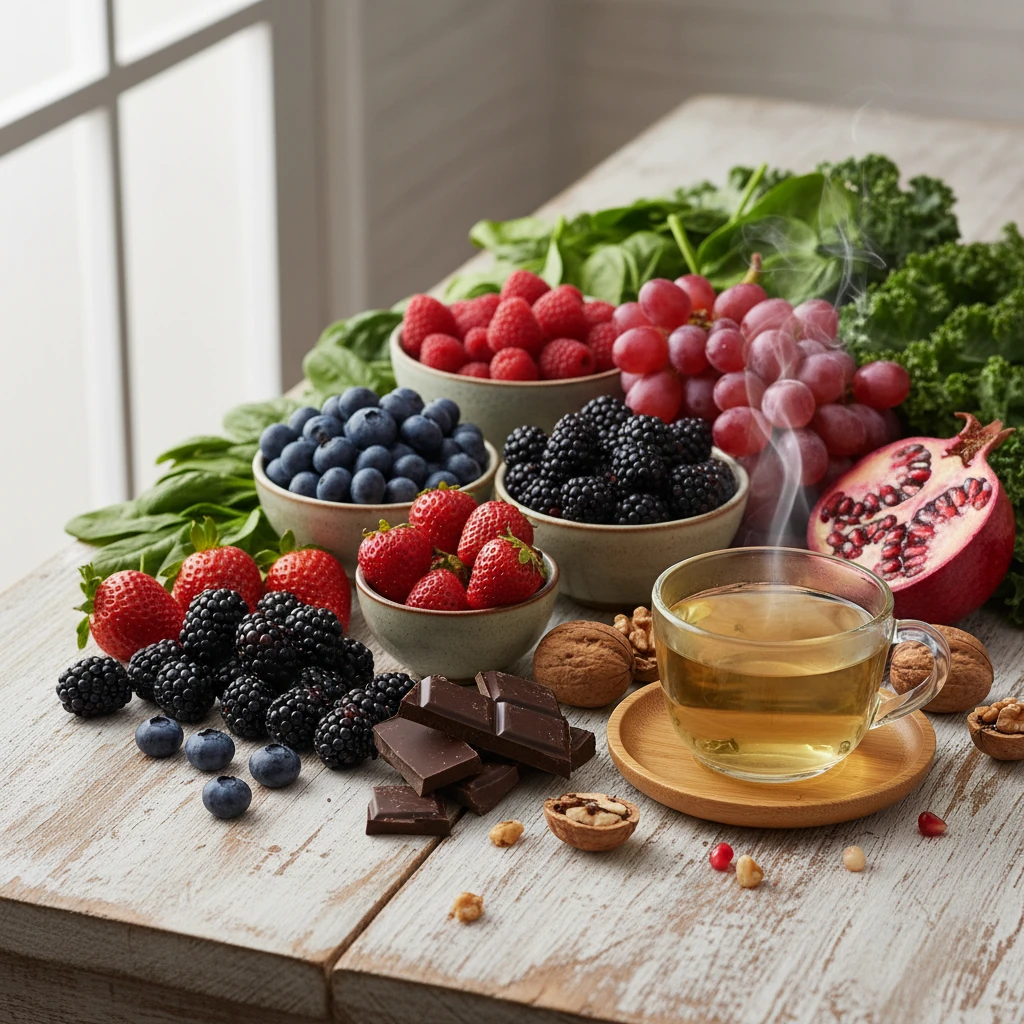
Have you ever heard of polyphenols? These fascinating plant compounds could contribute to a longer and healthier life. They hide in many of your favorite foods – from colorful berries to dark chocolate to green tea. Polyphenols are more than just simple nutrients: They act as antioxidants, protect your cells from damage, and may potentially contribute to the prevention of numerous diseases. In this article, you’ll learn everything important about these remarkable plant compounds and how you can optimally integrate them into your diet.
What are polyphenols anyway?
Polyphenols are secondary plant compounds that occur in a variety of plant-based foods. The term “secondary” doesn’t mean they’re unimportant – quite the opposite. While primary plant compounds like carbohydrates, proteins, and fats are essential for the plant’s survival, secondary plant compounds serve other important functions. They protect plants from UV radiation, ward off pests, and give them their characteristic colors.
Chemically speaking, polyphenols are aromatic compounds with multiple phenol groups – hence their name. Scientists have so far identified over 8,000 different polyphenols, which can be divided into four main groups: flavonoids, phenolic acids, stilbenes, and lignans. Each of these groups has its own unique properties and health benefits.
The main polyphenol groups at a glance
Flavonoids make up about 60% of all polyphenols and are the best-researched group. They include well-known compounds like quercetin in onions, catechins in green tea, and anthocyanins, which give berries their intense red and blue color. Phenolic acids are found mainly in coffee, whole grain products, and certain fruits. Stilbenes, whose best-known representative is resveratrol from red wine, have received much attention in anti-aging research in recent years. Lignans are found primarily in flaxseeds and whole grains.
How polyphenols can protect your health
The health benefits of polyphenols are diverse and scientifically well-researched. Their most important property is their antioxidant effect. As antioxidants, polyphenols neutralize free radicals – aggressive oxygen molecules that can damage your cells and accelerate the aging process. This oxidative damage is involved in the development of many chronic diseases.
Protection for your cardiovascular system
A polyphenol-rich diet may potentially reduce your risk of cardiovascular diseases. Studies show that people who regularly consume polyphenol-rich foods may have a lower risk of heart disease. Polyphenols can improve the function of your blood vessels, lower blood pressure, and reduce inflammation in the arteries. They can also prevent the oxidation of LDL cholesterol – a crucial step in the development of arteriosclerosis.
Particularly impressive is the effect of flavonoids from dark chocolate and green tea. These can stimulate the production of nitric oxide, a molecule that relaxes your blood vessels and thus improves blood flow. Regular consumption can lower your systolic blood pressure by an average of 2–3 mmHg – a moderate but quite relevant effect.
Support in the fight against cancer
Polyphenols also play a role in cancer prevention. They can influence the development and growth of cancer cells on multiple levels. Polyphenols can protect your DNA from damage, promote programmed cell death of abnormal cells, and inhibit the formation of new blood vessels that tumors need for their growth.
Epidemiological studies show that a polyphenol-rich diet may be associated with a reduced risk of various types of cancer, especially breast, prostate, and colon cancer. The catechins from green tea, for example, have shown an inhibitory effect on cancer cells in laboratory studies. Important to know: These findings are based mainly on observational studies and laboratory experiments – polyphenols are not a cancer therapy or guaranteed protection.
Positive effects on your brain
Your brain can also benefit from polyphenols. These plant compounds can cross the blood-brain barrier and work directly in your brain. They improve blood circulation to the brain, can promote the formation of new nerve cells, and protect existing neurons from damage.
Research suggests that a polyphenol-rich diet may potentially reduce the risk of neurodegenerative diseases such as Alzheimer’s and Parkinson’s. Studies with older adults show that regular consumption of berries, which are particularly rich in anthocyanins, can improve cognitive function and slow age-related mental decline. Your memory and concentration ability can also benefit from increased polyphenol intake.
The best polyphenol sources in your diet
The good news is: Polyphenol-rich foods are delicious, diverse, and easy to integrate into your daily diet. You don’t need to buy exotic or expensive superfoods – many local foods are true polyphenol powerhouses.
Beverages as polyphenol suppliers
Coffee is the main source of polyphenols in the Western diet for many people. A cup of coffee contains between 200 and 550 mg of polyphenols, mainly chlorogenic acid. Green tea is also an excellent source, especially for catechins. The epigallocatechin gallate (EGCG) in green tea is one of the most intensively researched polyphenols with impressive health properties.
Black tea, red wine, and cocoa beverages also provide significant amounts of polyphenols. With red wine, however, you should be moderate – the potential health benefits of polyphenols are negated by excessive alcohol consumption. One glass per day for women and a maximum of two glasses for men are considered acceptable, although less or no alcohol at all is also recommendable from a health perspective.
Fruits and berries
Berries are among the most polyphenol-rich foods of all. Blueberries, blackberries, strawberries, and black currants are particularly recommended. The intense colors already reveal their high content of anthocyanins. Apples, especially with skin, grapes, cherries, and plums are also excellent sources.
Citrus fruits provide special flavonoids like hesperidin and naringin. A tip: Also eat some of the white skin under the peel, because that’s where many polyphenols are concentrated. Pomegranates have received a lot of attention in recent years – rightly so, because they contain particularly potent polyphenols with strong antioxidant effects.
Vegetables and legumes
Various vegetables also provide plenty of polyphenols. Artichokes lead the list, followed by red onions, spinach, and broccoli. Red onions contain particularly high amounts of quercetin, a flavonoid with anti-inflammatory properties. Dark green leafy vegetables like kale and arugula are also rich in polyphenols.
Legumes like black beans, soybeans, and lentils are not only good protein sources but also valuable polyphenol suppliers. Soy products contain isoflavones, a special group of polyphenols with hormone-like properties that may be particularly interesting for women in menopause.
Nuts, seeds, and spices
Nuts, especially walnuts, hazelnuts, and pecans, contain considerable amounts of polyphenols. You’ll find the highest concentrations in the thin brown skin that surrounds the nuts – so better not remove it. Flaxseeds are the richest source of lignans.
Spices and herbs are absolute polyphenol champions when you consider their content per weight. Cloves, star anise, oregano, peppermint, and thyme top the list. Even though you only use spices in small amounts, they can make a valuable contribution to your polyphenol intake. Turmeric with its active ingredient curcumin also has remarkable antioxidant and anti-inflammatory properties.
How to optimize polyphenol absorption
It’s not enough to simply eat polyphenol-rich foods – the type of preparation and combination can significantly influence bioavailability, that is, your body’s ability to absorb them.
Tips for maximum bioavailability
Many polyphenols are sensitive to heat and light. Raw or gently cooked fruits and vegetables therefore often contain more active polyphenols than heavily processed foods. Steaming is better than boiling, as fewer polyphenols transfer into the cooking water. If you boil vegetables, use the cooking water further, for example for soups or sauces.
Some polyphenols actually become more available through light processing. Tomatoes contain more usable lycopene when heated. The combination with fat can also improve the absorption of fat-soluble polyphenols. A drizzle of olive oil over your salad is therefore not only tasty but also makes health sense.
The simultaneous intake of vitamin C can increase the bioavailability of some polyphenols. Therefore, combine green tea with a splash of lemon, for example, or eat your berries together with oranges. Black pepper, by the way, significantly increases the absorption of curcumin from turmeric – a good reason to combine these two spices.
Watch out for inhibitors
Milk can impair the absorption of some polyphenols from tea and coffee, as the proteins can form complexes with the polyphenols. If you want to achieve maximum health benefits, drink your tea plain or with lemon. Certain medications can also influence polyphenol absorption – discuss this with your doctor if necessary.
How much do you really need?
There is no official recommendation for daily polyphenol intake yet, as research in this area is still relatively young. However, studies suggest that an intake of about 500 to 1,000 mg of polyphenols per day may be associated with health benefits.
That sounds like a lot, but it’s easier to achieve than you think. A cup of coffee already provides 200–550 mg, a glass of red wine about 100–200 mg, a serving of berries around 200–300 mg, and an apple with skin approximately 100 mg. With a varied, plant-based diet, you’ll easily reach these amounts.
More important than the absolute amount is variety. Different polyphenols have different effects, so you should integrate as many different polyphenol-rich foods as possible into your diet. The rule of thumb “eat the rainbow” is especially applicable here: The more colorful your plate, the better.
Are there risks or side effects?
Polyphenols from natural foods are considered very safe, and hardly any side effects are known. Your body can only absorb a limited amount, and any excess is simply excreted. However, problems can occur with extremely high doses from dietary supplements.
Very high concentrations of certain polyphenols can inhibit the absorption of iron and other minerals. People with iron deficiency should therefore not drink polyphenol-rich beverages like tea or coffee directly with iron-rich meals. A time gap of one to two hours is recommended.
Caution is advised with dietary supplements containing isolated polyphenols. In high doses, they can interact with medications or impair liver function. Stick to natural foods – they offer not only polyphenols but also many other valuable nutrients in a balanced combination.
Conclusion: Polyphenols as a building block for a healthier life
Polyphenols are far more than just pigments in plants – they are valuable allies for your health. Their antioxidant, anti-inflammatory, and cell-protective properties may potentially contribute to the prevention of many chronic diseases and positively influence your aging process. From your cardiovascular system to your brain to your cells, your entire body can benefit from a polyphenol-rich diet.
The best part: You don’t have to make drastic changes or buy expensive dietary supplements. By eating a variety of colorful fruits and vegetables daily, regularly snacking on berries, munching on nuts, drinking green tea or coffee, and generously seasoning with herbs and spices, you automatically supply your body with an impressive range of different polyphenols. Every single meal is an opportunity to promote your health and invest in a more vital life.
Start today by being more conscious about polyphenol-rich foods. Your body may thank you with more energy and better health. Nature has given us a wonderful gift with polyphenols – use it!
Dieser Ratgeber dient ausschließlich zu Informationszwecken und ersetzt keine medizinische Beratung oder Diagnose. Bei anhaltenden Beschwerden konsultieren Sie bitte einen Arzt. Nahrungsergänzungsmittel und Heilpflanzen sollten nicht ohne Rücksprache mit einem Therapeuten eingenommen werden.