
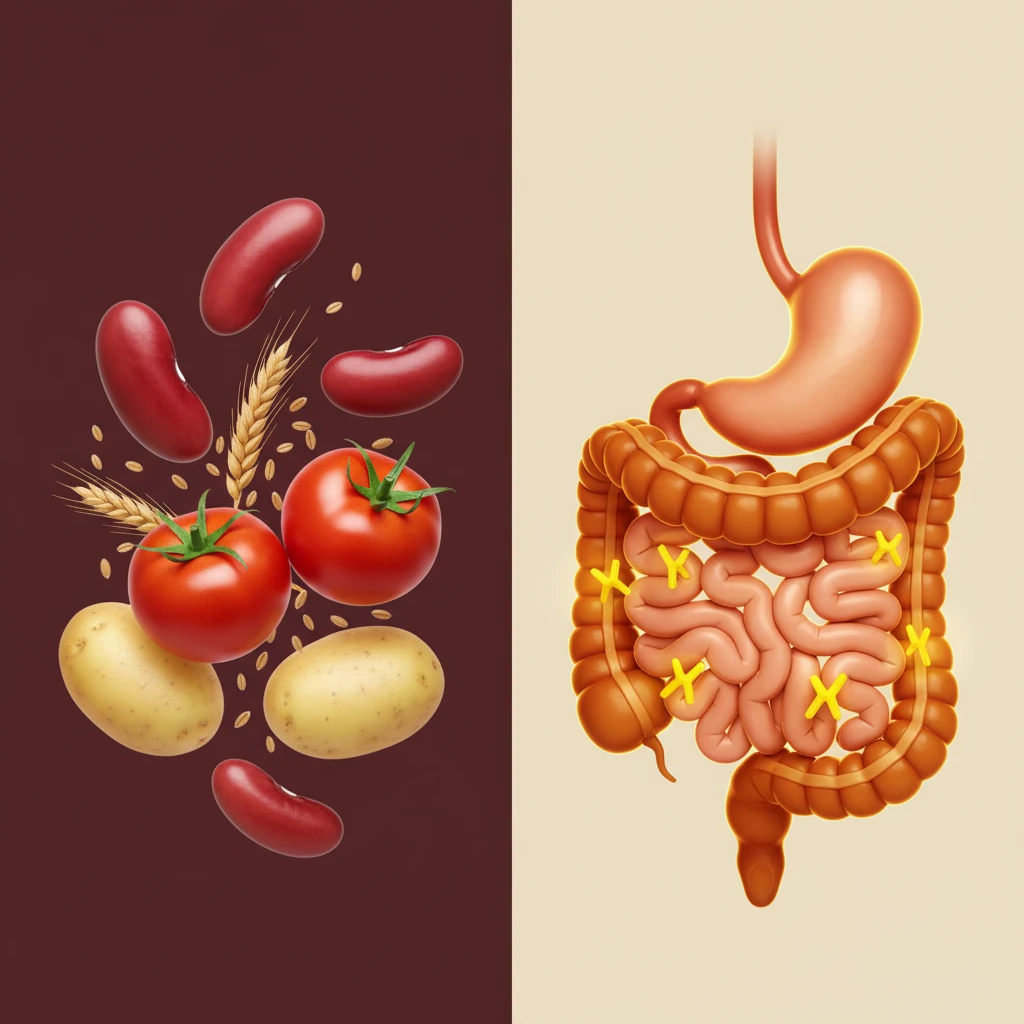
Lectins have become a controversial topic in the nutrition world in recent years. While some experts label them as “anti-nutrients” that can harm your gut, others don’t see them as a major problem. But what’s really true? In this article, you’ll learn what lectins actually are, how they affect your gut, and whether you really should eliminate them from your diet.
What are lectins anyway?
Lectins are plant proteins found in nearly all plants – though in very different amounts. They serve important protective functions for the plant: they ward off predators and protect against pests and pathogens. Botanically speaking, lectins are a kind of natural defense system of plants.
These proteins have a special property: they can bind to carbohydrates and sugar molecules. It’s precisely this ability that makes them both interesting for research and potentially problematic for your digestive tract. Because when lectins enter your body, they can attach to the intestinal wall and, under certain circumstances, cause problems there.
Where do lectins occur?
The following foods are particularly high in lectins:
Legumes such as beans, lentils, chickpeas, and peanuts contain high amounts of lectins. Raw kidney beans are the absolute front-runner here. Grains, especially wheat, as well as nightshade vegetables like tomatoes, potatoes, eggplants, and peppers also contain notable amounts. Even dairy products and certain vegetables contain lectins, albeit in lower concentrations.
How do lectins affect your gut?
The effects of lectins on your gut health are more complex than often portrayed. To understand what happens in the body, let’s take a closer look at the various mechanisms.
Binding to the intestinal wall
Lectins are largely resistant to digestion by your stomach acid and digestive enzymes. This means they can reach your intestine partially intact. There they can attach to the epithelial cells of the intestinal mucosa – that is, to those cells that form the inner wall of your intestine.
This binding can theoretically affect the so-called tight junctions. These are the tight connections between intestinal cells that normally function like a protective barrier and control what enters your bloodstream. When these connections are disrupted, we speak of increased intestinal permeability, colloquially also known as “leaky gut.”
Inflammatory reactions and immune system
In some people, lectins in higher amounts can trigger inflammatory reactions in the gut. They are recognized by the immune system as foreign invaders, which can provoke an immune response. In sensitive individuals, this can lead to symptoms such as bloating, diarrhea, abdominal pain, or nausea.
It becomes particularly problematic when lectins enter the bloodstream through an already damaged intestinal barrier. There they may potentially promote inflammatory reactions and contribute to chronic ailments.
Impairment of nutrient absorption
Lectins can also hinder the absorption of nutrients. They bind to the intestinal wall and can thus potentially complicate the absorption of important minerals such as iron, calcium, zinc, and phosphorus. They can also influence the function of digestive enzymes, which can impair the utilization of proteins and other nutrients.
How dangerous are lectins really?
Despite these potential problems, it’s important to put the whole thing into the right perspective. The reality is significantly more nuanced than some nutrition trends suggest.
The dose makes the poison
Only in very high concentrations are lectins actually acutely toxic. The classic example is raw or insufficiently cooked kidney beans, which can lead to severe poisoning symptoms. Just a few raw kidney beans can trigger nausea, vomiting, and diarrhea.
However, hardly anyone eats raw beans. Through normal preparation methods, most lectins are rendered harmless or their concentration is greatly reduced. The amounts you encounter in everyday life are harmless for most people.
Individual differences
Not everyone reacts the same to lectins. People with existing intestinal problems such as irritable bowel syndrome, chronic inflammatory bowel diseases, or increased intestinal permeability may be more sensitive to lectins. In their case, the intestinal barrier is already weakened, so lectins can more easily cause problems.
If you have a healthy gut, a balanced gut flora, and no pre-existing conditions, you probably won’t notice any negative effects from normal amounts of lectins in your diet.
The benefits of lectin-containing foods
Here comes an important point: many lectin-rich foods are simultaneously extremely healthy. Legumes provide valuable plant protein, fiber, B vitamins, iron, and other minerals. Whole grains are rich in fiber and important micronutrients. Tomatoes contain the antioxidant lycopene.
To avoid these foods across the board would mean forgoing an abundance of health-promoting nutrients. Numerous studies show that people who regularly eat legumes and whole grain products have a lower risk of cardiovascular disease, type 2 diabetes, and certain cancers.
How to reduce lectins in your diet
If you’re among the people who are sensitive to lectins, or if you simply want to be cautious, there are various preparation methods that significantly reduce lectin content.
Soaking and cooking
Soaking legumes overnight and then discarding the soaking water already removes a large part of the lectins. Cooking at high temperatures destroys or denatures most of the remaining lectins – meaning they lose their problematic structure.
You should boil beans vigorously for at least 10–15 minutes. Even better is using a pressure cooker, as the higher temperatures eliminate lectins even more effectively. Important: cooking at too low temperatures (below 80 degrees Celsius) can actually increase lectin activity – so no slow cooking for beans!
Fermentation and sprouting
Fermentation processes, such as those that occur in sourdough bread or fermented soy products, break down lectins. Sprouting grains, legumes, and seeds also significantly reduces lectin content. At the same time, nutrients are made more bioavailable.
Peeling and removing seeds
In nightshade vegetables like tomatoes and peppers, many lectins are located in the skin and seeds. If you remove these, you automatically reduce lectin intake. With potatoes, you should make sure to remove green spots and sprouts, as these contain not only lectins but also solanine, a natural toxin.
When should you avoid lectins?
There are actually situations in which it may make sense to temporarily reduce or avoid lectin-rich foods.
In diagnosed autoimmune diseases, some sufferers experiment with a low-lectin diet and report improvements, although there is still insufficient scientific evidence here. Even with proven increased intestinal permeability, chronic intestinal inflammation, or irritable bowel syndrome, a reduction of lectins can be part of a therapeutic approach.
However, it’s important: you shouldn’t undertake such dietary changes on your own, but always in consultation with a doctor or qualified nutritionist. A too restrictive diet can lead to nutrient deficiencies and is often not sustainable in the long term.
Finding balance: Practical recommendations
For most people, the rule is: you don’t have to be afraid of lectins. Instead of completely eliminating lectin-containing foods, you should pay attention to careful preparation.
Always cook legumes sufficiently long and soak them beforehand. Prefer fermented grain products like sourdough bread. Vary your food selection so you’re not eating the same lectin-rich products daily. Pay attention to your body’s signals – if you regularly have complaints after certain foods, it’s worth taking a closer look.
A healthy gut flora is your best protection against potential negative effects of lectins. Support it through a high-fiber diet, fermented foods, and sufficient exercise. An intact gut can handle normal amounts of lectins without problems.
Conclusion: Lectins – view them with nuance instead of demonizing them
Lectins are neither the dangerous gut toxins they are sometimes portrayed as, nor completely harmless. The truth lies, as so often, in the middle. For healthy people with an intact intestinal barrier, normally prepared lectin-containing foods generally pose no problem – on the contrary, they provide valuable nutrients.
It only becomes critical at very high concentrations (such as in raw beans) or in people with pre-damaged intestines. Through simple preparation methods such as soaking, cooking, and fermenting, lectin content can be significantly reduced.
Instead of categorically avoiding healthy foods like legumes or whole grains, you should rather focus on a varied diet and correct preparation. If you have specific complaints, an individually adapted diet under professional guidance may make sense. However, for the general population, the rule is: a balanced diet with properly prepared plant-based foods promotes your health more than it harms it – lectins or not.
Dieser Ratgeber dient ausschließlich zu Informationszwecken und ersetzt keine medizinische Beratung oder Diagnose. Bei anhaltenden Beschwerden konsultieren Sie bitte einen Arzt. Nahrungsergänzungsmittel und Heilpflanzen sollten nicht ohne Rücksprache mit einem Therapeuten eingenommen werden.