
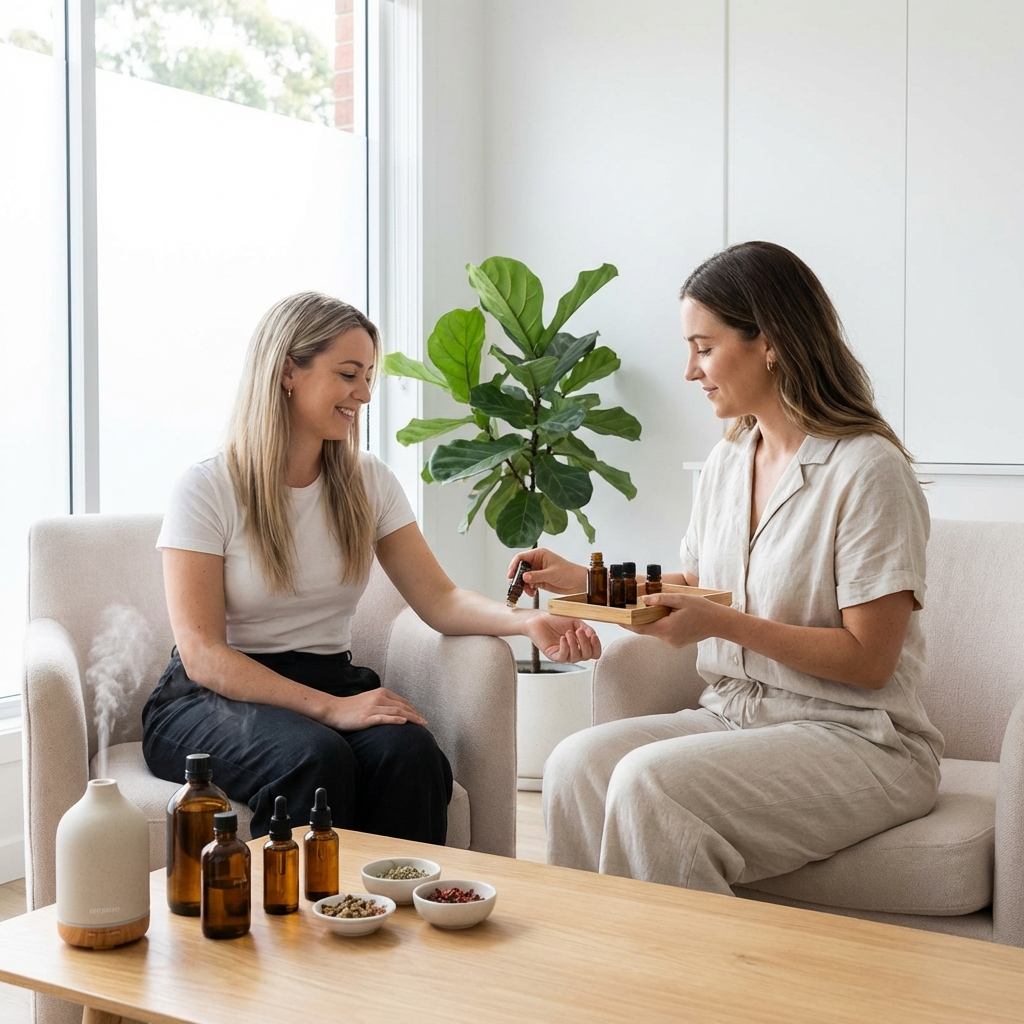
Essential oils have accompanied humanity for thousands of years and are experiencing a renaissance in natural health care today. Whether for headaches, sleep problems, or colds – these concentrated plant extracts can offer you diverse possibilities for support with various ailments. In this article, you’ll learn how to use essential oils correctly and which oils can be applied for which complaints.
What are essential oils and how do they work?
Essential oils are highly concentrated plant extracts obtained through steam distillation, cold pressing, or other methods from flowers, leaves, roots, bark, or fruits. A single drop can contain the essence of several kilograms of plant material – that’s what makes their intense effect.
The effect of essential oils unfolds on multiple levels: Through your sense of smell, the scent molecules reach your limbic system in the brain, which is involved in emotional and hormonal processes. With external application, the small molecules can also be absorbed through your skin and enter the bloodstream in small amounts.
The different modes of action
Essential oils can possess antimicrobial, anti-inflammatory, pain-relieving, antispasmodic, and calming properties. Many oils work simultaneously on multiple levels – physically, emotionally, and mentally. This diverse effect makes them interesting helpers in your everyday health routine.
The most important essential oils and their areas of application
Lavender oil – the all-rounder for relaxation and skin care
Lavender oil is among the most versatile and best-researched essential oils. You can use it for sleep disorders, restlessness, anxiety, and stress. Lavender oil is also traditionally used for skin problems such as minor burns, insect bites, or acne. A few drops in a diffuser or on a handkerchief can promote your sleep, while a gentle massage with diluted lavender oil can release tension.
Peppermint oil – for headaches and digestive problems
Refreshing peppermint oil contains a high proportion of menthol, which has a cooling and pain-relieving effect. For tension headaches, you can apply diluted peppermint oil to temples and neck – studies show that the effect can be comparable to that of conventional painkillers. Peppermint oil is also traditionally used for nausea, digestive problems, and bloating. Internal use should only be done after consultation with a doctor or pharmacist.
Eucalyptus oil – the helper for respiratory diseases
If you suffer from colds, stuffy nose, or bronchitis, eucalyptus oil can be your natural ally. The expectorant and antimicrobial properties make it ideal for inhalations. You can add a few drops to hot water and inhale the rising vapors. As an addition in a diffuser, eucalyptus oil can also facilitate breathing.
Tea tree oil – antimicrobial powerhouse
Tea tree oil possesses antibacterial, antiviral, and antifungal properties. You can use it for skin blemishes, fungal infections, minor wounds, and gum inflammation. However, it’s important that you never apply tea tree oil undiluted over large areas, as it can irritate the skin. For acne, spot treatment with a cotton swab helps – diluted in a 1:1 ratio with a carrier oil.
Chamomile oil – anti-inflammatory and calming
Roman and German chamomile provide valuable essential oils with anti-inflammatory and antispasmodic effects. You can use chamomile oil for skin irritations, eczema, menstrual complaints, and nervous stomach problems. The calming effect can also help you with stress and inner restlessness.
Application methods for essential oils
Aromatherapy through inhalation
The simplest method is application through the sense of smell. You can use essential oils in an oil burner, an electric diffuser, or on a handkerchief. For room scenting, 3–5 drops are usually sufficient, depending on room size and device. For acute respiratory problems, steam inhalation is particularly effective: Add 1–2 drops of essential oil to a bowl of hot water and inhale the vapors under a towel.
External application on the skin
For massages, rubs, or compresses, you must always dilute essential oils with a carrier oil. Suitable base oils are almond oil, jojoba oil, or coconut oil. The correct dilution is 1–3% for adults – this corresponds to approximately 1–3 drops of essential oil per teaspoon (about 5 ml) of carrier oil. For children aged 6 and above, you should reduce the concentration to 0.5–1%.
Aromatic baths for relaxation and well-being
A full bath with essential oils combines the effect of the aromatic substances with the beneficial warmth of the water. Since essential oils don’t dissolve in water, you need an emulsifier such as cream, honey, or sea salt. Mix 3–5 drops of essential oil with 2–3 tablespoons of cream or one tablespoon of salt before adding the mixture to the bathwater.
Compresses for local complaints
Warm or cold compresses with essential oils are well-suited for muscle tension, sprains, or inflammation. Add 2–3 drops of the desired oil to a bowl of warm or cold water, dip a cloth in it, wring it out, and place it on the affected area.
Applications for common complaints
Headaches and migraines
For tension headaches, a mixture of peppermint and lavender oil has proven effective. Dilute 1–2 drops each in a teaspoon of carrier oil and gently massage the mixture into temples, forehead, and neck. The cooling effect of peppermint oil combined with the relaxing property of lavender can provide you with relief. For migraines, you should seek medical advice.
Sleep disorders and restlessness
For restful sleep, a combination of lavender, Roman chamomile, and bergamot is suitable. Use these oils in a diffuser in the bedroom about an hour before bedtime. A relaxing evening bath with 3–5 drops of lavender oil (with emulsifier) can prepare your body for rest.
Colds and respiratory infections
For cold symptoms, you can create a mixture of eucalyptus, peppermint, and tea tree oil. Inhale this combination several times daily or use it in a diffuser. A chest rub with diluted eucalyptus oil (1–2 drops per teaspoon of carrier oil) before bedtime can facilitate breathing.
Digestive complaints
Cramping abdominal pain, bloating, and nausea can be treated with peppermint, ginger, or fennel oil. A gentle abdominal massage in a clockwise direction with 2–3 drops of peppermint oil in a tablespoon of carrier oil can release cramps and stimulate digestion.
Skin problems and inflammation
Blemished skin can benefit from the antibacterial effect of tea tree oil, while lavender helps with skin irritations and minor injuries. Roman chamomile is particularly suitable for inflammatory skin conditions such as eczema. You can mix 1 drop of the appropriate oil into your regular face cream.
Muscle and joint pain
Tension and pain in the musculoskeletal system often respond well to rosemary oil, lavender oil, or juniper oil. A massage with these circulation-promoting oils (2–3 drops per tablespoon of carrier oil) can loosen hardened muscles. Warm compresses with lavender or marjoram can also provide you with relief.
Important safety instructions for use
Quality is crucial
Pay attention to high quality when purchasing essential oils. Organic, pure essential oils without synthetic additives are important for therapeutic purposes. The designation “100% pure natural essential oil” and a precise botanical name are important quality features.
Observe proper dilution
Never use essential oils undiluted on large skin areas. Even with spot application, undiluted oils can cause skin irritation. Particularly irritating to skin are cinnamon oil, clove oil, oregano oil, and thyme oil – special caution is required here.
Caution in special life situations
If you are pregnant or breastfeeding, you should seek medical advice before using essential oils. Some oils such as sage, rosemary, or camphor are not suitable during pregnancy. For infants and young children under 6 years of age, you must not apply menthol-containing oils such as peppermint or eucalyptus to the facial area, as they can cause breathing difficulties.
Allergies and skin sensitivity
Always test new essential oils first on a small area of skin to rule out allergic reactions. Place one drop of diluted oil (in the intended concentration) in the crook of your arm and wait 24 hours. If redness, itching, or other reactions occur, you should not use the oil.
Internal use only after professional consultation
You should only take essential oils internally after consultation with a doctor, pharmacist, or experienced aromatherapist. Many essential oils can damage mucous membranes and be toxic when taken orally.
Storage and shelf life of essential oils
Store your essential oils in a cool, dark place with tight closure. Amber glass or violet glass bottles protect the sensitive ingredients from light exposure. Most oils have a shelf life of 2–3 years when stored properly, while citrus oils remain usable for only about one year. Watch for changes in smell or consistency – these indicate oxidation.
Conclusion: Essential oils as natural health helpers
Essential oils offer you an opportunity to support many everyday complaints in a natural way. From headaches to sleep problems to colds – the power of plants is available to you in concentrated form. However, it’s important that you use them properly, pay attention to quality, and follow the safety instructions.
Start with a few basic oils such as lavender, peppermint, and tea tree oil and expand your collection gradually. With some experience, you’ll quickly find out which oils can help you best with which complaints. Essential oils don’t replace medical treatment for serious illnesses, but can be a valuable addition to your health care.
Listen to your body, experiment carefully, and enjoy the beneficial effect of these traditional natural remedies. With the right knowledge and a little practice, you can safely and effectively integrate essential oils into your everyday life and thus support your well-being in a natural way.
Dieser Ratgeber dient ausschließlich zu Informationszwecken und ersetzt keine medizinische Beratung oder Diagnose. Bei anhaltenden Beschwerden konsultieren Sie bitte einen Arzt. Nahrungsergänzungsmittel und Heilpflanzen sollten nicht ohne Rücksprache mit einem Therapeuten eingenommen werden.