
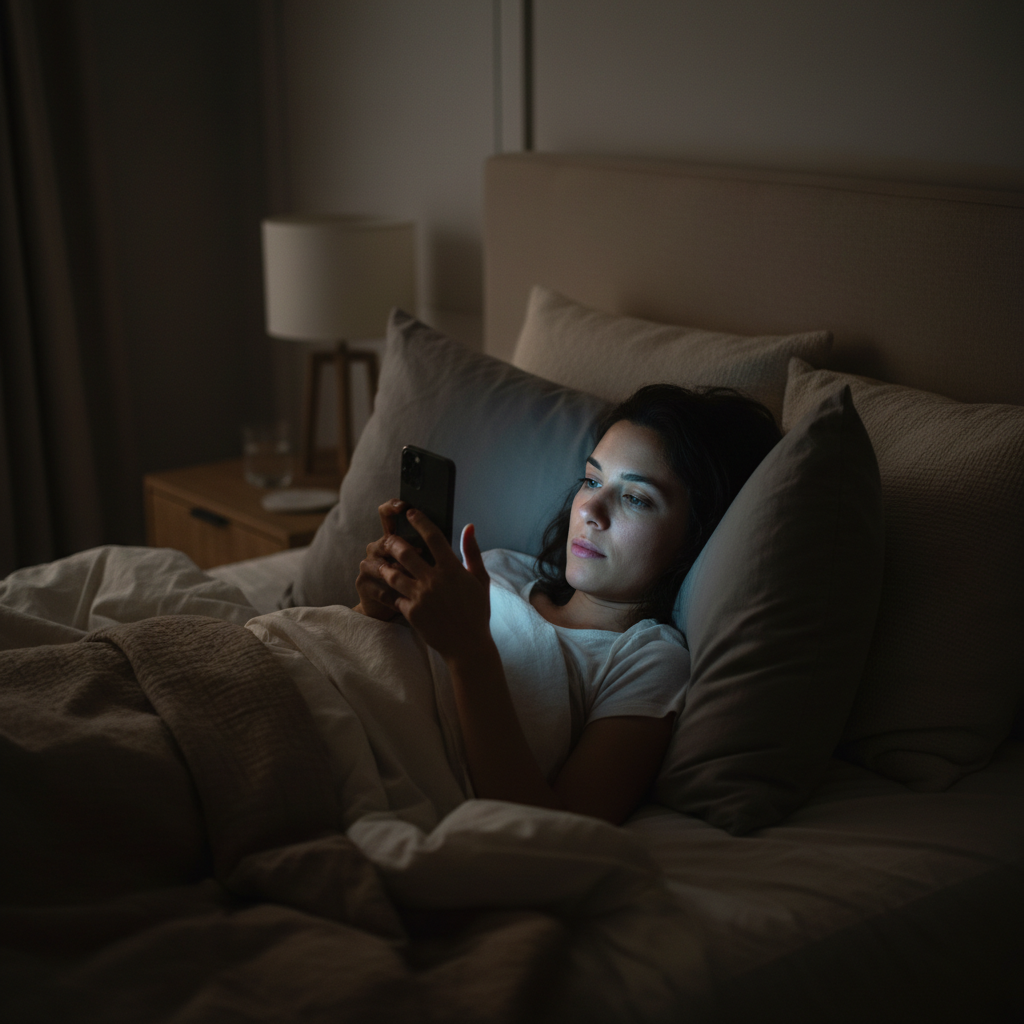
In our modern world, we are constantly surrounded by screens – smartphones, tablets, computers, and televisions accompany us from waking up to going to sleep. But what many don’t know: the blue light emitted by these devices has significant effects on our sleep-wake rhythm and our hormonal balance. A digital detox, meaning a conscious break from digital devices, can help restore natural bodily functions and sustainably improve health.
What is blue light and where does it occur?
Blue light is a part of the visible light spectrum with a wavelength between 380 and 500 nanometers. It is high-energy and occurs naturally in sunlight, where it plays an important role in our day-night rhythm. During the day, it has an activating effect and promotes alertness and concentration.
However, it becomes problematic when we expose ourselves to artificial blue light even after sunset. LED screens, smartphones, tablets, computer monitors, and modern LED lighting emit particularly high levels of blue light. While we used to be exposed mainly to warm, yellowish light after dark, today we bombard our eyes with blue light late into the night.
How blue light affects our sleep-wake rhythm
Our body has an internal clock, the so-called circadian rhythm, which controls numerous biological processes. Central to this regulation is the hormone melatonin, which is produced in the pineal gland and makes us tired.
Important to know: Research on blue light and sleep does not show clear results in all studies. While the basic mechanism – blue light inhibits melatonin – is scientifically proven, the practical effects vary greatly individually. Factors such as brightness, exposure duration, and personal sensitivity play an important role.
The role of melatonin
Melatonin is normally secreted in darkness and signals to the body that it’s time to prepare for sleep. Production typically begins to increase one to two hours before the usual bedtime and reaches its peak in the middle of the night. In daylight, melatonin production is suppressed, which keeps us awake and alert.
The problem: Blue light tricks our brain into thinking it’s still daytime. Specialized photoreceptors in the retina, the so-called intrinsically photosensitive retinal ganglion cells, are particularly sensitive to blue light. They send signals to the suprachiasmatic nucleus in the hypothalamus, which regulates melatonin production. Blue light exposure in the evening can suppress melatonin secretion. Studies show that all-night exposure to room light can reduce melatonin production by more than 50 percent.
Delayed sleep onset and reduced sleep quality
Studies show that using smartphones or tablets before bedtime can significantly extend the time it takes to fall asleep. People who intensively use digital devices in the evening may experience a delayed sleep onset. Studies show delays of an average of about 10 minutes, although the effects can vary individually. Additionally, their internal clock shifts backward, leading to a later sleep rhythm – problematic for all those who have to get up early in the morning.
Sleep quality also suffers: the proportion of deep sleep, which is particularly important for physical regeneration, may be reduced. Those affected report more frequently about restless sleep and nighttime awakening. In the morning, they feel less refreshed, even if the sleep duration was actually sufficient.
Effects on the hormonal system
The disruption of the sleep-wake rhythm by blue light has far-reaching consequences for the entire hormonal system. Hormones control virtually all important bodily functions, and their secretion follows precise temporal patterns.
Cortisol and stress hormones
Cortisol, our most important stress hormone, follows a pronounced daily rhythm. Normally, cortisol levels are highest in the morning and decrease throughout the day. Chronic blue light exposure and disturbed sleep can disrupt this rhythm, which can lead to elevated evening cortisol levels. The consequences are diverse: increased blood pressure, weight gain, weakened immune system, and increased susceptibility to stress.
Influence on sex hormones
The production of sex hormones such as testosterone and estrogen is also linked to the circadian rhythm. Testosterone, for example, is produced mainly during sleep, especially in REM phases. Chronic sleep deprivation and disturbed sleep architecture can lead to reduced testosterone levels, which in men can manifest as reduced libido, muscle loss, and lack of energy.
Metabolic hormones
Insulin, leptin, and ghrelin – these hormones regulate our metabolism and our feeling of hunger. Sleep deprivation leads to increased ghrelin levels (makes hungry) and reduced leptin levels (signals satiety). The result: increased appetite, especially for high-calorie, carbohydrate-rich food. At the same time, insulin sensitivity is reduced, which increases the risk of diabetes.
Long-term health risks
Chronic exposure to blue light in the evening and the associated sleep and hormonal disorders are not harmless comfort disorders. Scientific studies increasingly show connections with serious health problems.
Increased cancer risk
Several epidemiological studies suggest that shift workers who are exposed to bright light at night have an increased risk of certain cancers, particularly breast cancer and prostate cancer. The International Agency for Research on Cancer (IARC) has classified shift work that disrupts the circadian rhythm as “probably carcinogenic.” Melatonin has not only sleep-promoting, but also antioxidant and possibly cancer-inhibiting properties.
Metabolic syndrome and diabetes
The disruption of the day-night rhythm is associated with an increased risk of obesity, type 2 diabetes, and metabolic syndrome. Our metabolism depends on a regular sleep-wake rhythm. When this is disrupted, numerous metabolic processes become unbalanced.
Mental health
There is a bidirectional relationship between sleep disorders and mental illnesses such as depression and anxiety disorders. Disturbed sleep can intensify depressive symptoms, and conversely, depression is frequently accompanied by sleep problems. Blue light exposure in the evening can intensify this vicious cycle.
Digital detox: Practical strategies for protection
The good news: With relatively simple measures, the negative effects of blue light can be significantly reduced. A digital detox doesn’t have to mean completely giving up digital devices – it’s more about conscious and healthy use.
The 3-2-1 rule
A proven strategy is the 3-2-1 rule: Three hours before bedtime, no more large meals; two hours before, no more work; and one hour before bedtime, all screens should be turned off. This last hour can be used for relaxing activities such as reading, meditation, or light stretching exercises.
Blue light filters and apps
Most modern smartphones and computers now offer blue light filters or night modes. These reduce the blue light component and shift the color spectrum toward warm tones. Apps like f.lux automatically adjust the screen color to the time of day. Although these measures are helpful, they don’t replace a complete screen break before bedtime.
Blue light filter glasses
Special glasses with orange-tinted lenses filter out the blue light component. However, the scientific evidence on effectiveness is mixed – some studies show positive effects on melatonin levels, others find no demonstrable improvements in sleep quality.
Lighting optimization
Not only screens, but also room lighting plays a role. In the evening, bright, bluish LED light should be avoided. Instead, dimmable lamps with warm white light or even real candles are recommended. For the bedroom, complete darkening is ideal – even small light sources can disturb melatonin production.
Establishing an evening routine
A consistent evening routine without digital devices signals to the body that it’s time to wind down. This could include: a warm bath, relaxation exercises, journaling, or reading a printed book. Regular bedtimes and wake-up times also stabilize the circadian rhythm.
Daylight as a natural timekeeper
As important as it is to avoid blue light in the evening, it’s equally important to be exposed to sufficiently bright light during the day. Natural daylight is far more intense than artificial lighting and helps synchronize the internal clock.
Experts recommend spending at least 30 minutes outdoors every day, ideally in the morning. This strengthens the contrast between day and night and improves melatonin production in the evening. People who are exposed to a lot of natural light during the day demonstrably sleep better and feel more alert and energized.
Implementing digital detox in everyday life
Theory is one thing, practical implementation is another. Here are some concrete tips for everyday life:
Create screen-free zones: The bedroom should be a place of rest. Ban smartphones, tablets, and televisions from this room. A classic alarm clock replaces the smartphone as a wake-up aid.
Use the airplane mode function: Activate airplane mode one hour before bedtime. This way you won’t be distracted by notifications and the temptation to “just quickly” check something disappears.
Establish media-free meals: Eat without a screen, focus on the meal and any togetherness with family or friends. This promotes not only better sleep, but also healthier eating behavior.
Plan regular digital detox days: Once a week or month, a complete day without digital media can help reduce dependency and increase appreciation for screen-free activities.
Conclusion: Healthy use of digital media
The effects of blue light on sleep and hormones are scientifically well-documented and should not be underestimated. In an increasingly digitalized world, however, it is neither possible nor sensible to completely give up screens. Rather, it’s about conscious, healthy use of digital media.
A digital detox, especially in the evening hours, can significantly improve sleep quality, stabilize the hormonal system, and long-term reduce the risk of various diseases. The strategies presented – from the 3-2-1 rule to blue light filters to lighting optimization – can be integrated relatively easily into everyday life.
Continuity is important: as with all health measures, the positive effects only become apparent with regular application. After just a few weeks, many people report better sleep, more energy during the day, and an overall improved quality of life.
Invest in your sleep health – your body will thank you with more vitality, better mood, and long-term health. The first step is often the hardest, but the effort is worth it. Start today by reducing your screen time in the evening, and observe how your well-being changes.
Dieser Ratgeber dient ausschließlich zu Informationszwecken und ersetzt keine medizinische Beratung oder Diagnose. Bei anhaltenden Beschwerden konsultieren Sie bitte einen Arzt. Nahrungsergänzungsmittel und Heilpflanzen sollten nicht ohne Rücksprache mit einem Therapeuten eingenommen werden.